
Last Updated: October 25, 2026
Quick Summary
To keep hands warm camera winter, choose gloves that balance insulation with dexterity, layer thin liners under your main gloves, and use hand warmers in your pockets on extremely cold days. Heated gloves with three adjustable settings offer up to 8 hours of warmth without sacrificing camera control.
- Match glove type to temperature: thin touchscreen gloves for 5-10°C, insulated gloves for 0-5°C, and heated gloves for below -5°C
- Heated gloves like the Mind Smart Rechargeable Heated Gloves provide up to 8 hours of continuous warmth with three adjustable heat settings
- Place hand warmers in pockets, not inside gloves, and rotate them between pockets on shoots lasting more than a few hours
- Keep spare camera batteries in an inside pocket close to body heat; cold batteries lose charge rapidly, sometimes dropping from 200 shots to 50 in freezing conditions
- Test your glove setup before leaving the house to ensure you can operate the shutter button, dials, touchscreen and lens release without removing them
Table of Contents
- Why Hand Warmth Matters for Winter Photography
- Choosing the Best Gloves for Winter Photography
- How to Use a Camera with Gloves On
- Using Hand Warmers for Photographers
- How to Keep Camera Batteries Warm in Cold Weather
- Layering Clothing and Gloves for Maximum Warmth
- Common Mistakes When Keeping Hands Warm in Winter Photography
- Getting Started with Heated Gloves for Your Winter Photography
- Frequently Asked Questions
Why Hand Warmth Matters for Winter Photography
Learning how to keep hands warm camera winter isn't just about comfort, it's about being able to operate your camera when it matters most.
When you keep hands warm camera winter, you face a bind: you need protection from freezing temperatures, but also enough control to adjust your lens, change settings and hit the shutter release.
This guide from Mind Smart covers practical strategies to keep hands functional in extreme cold, not just warm, which matters when you're outdoors for hours and your camera batteries are dying alongside your fingers.
Choosing the Best Gloves for Winter Photography
The gloves you choose make or break your winter photography. Standard winter gloves won't cut it; you need something that balances warmth with the precision cameras demand. The right choice depends on temperature, wind, session length and fine-control needs, use the framework below rather than buying the thickest pair you can find.
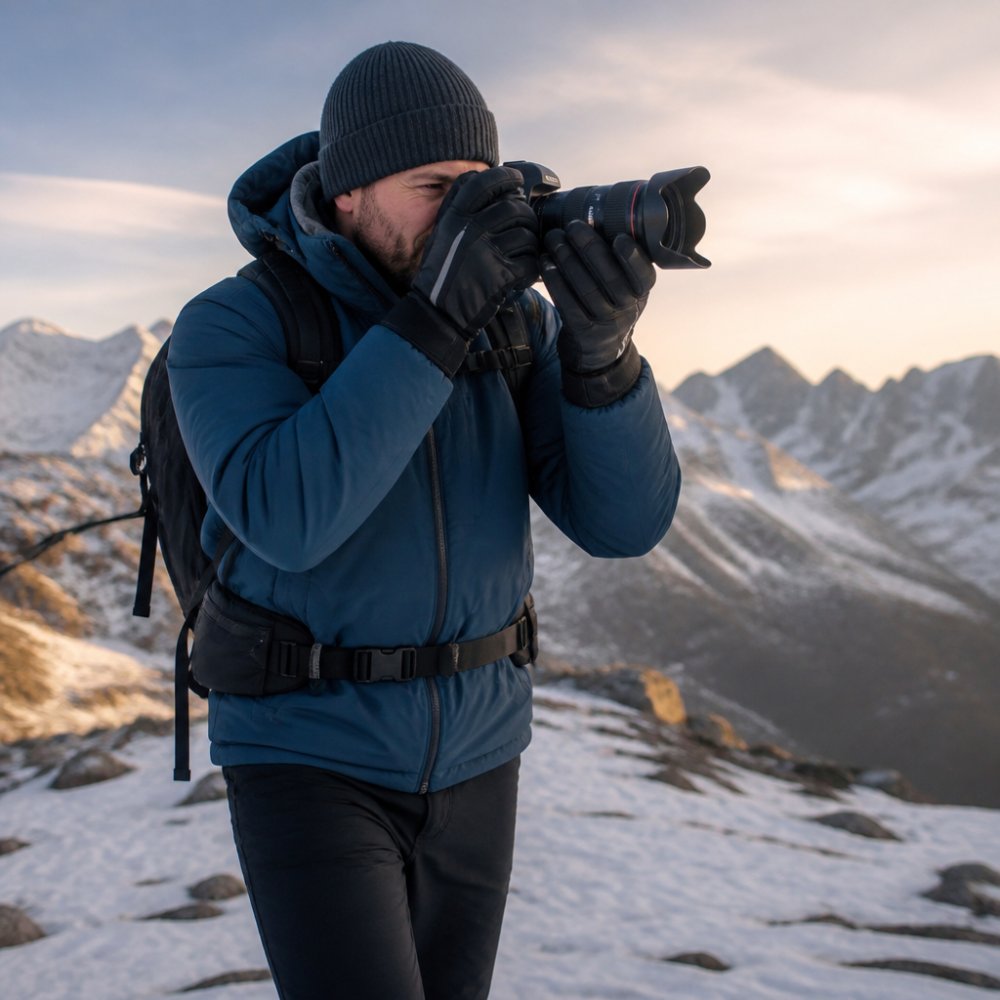
A practical glove-selection framework by temperature and conditions
Most photographers over-insulate their hands and then struggle with controls. Match glove type to the conditions you'll actually face, then layer for the margins.
| Conditions | Suggested hand setup | Why |
|---|---|---|
| Mild winter, around 5°C to 10°C, light wind, active shooting | Thin touchscreen-compatible photography gloves or glove liners alone | Enough warmth for short sessions; maximum dexterity for dials and touchscreens |
| Cold, around 0°C to 5°C, moderate wind, sessions up to two hours | Insulated photography gloves with thin palm insulation, plus a spare liner pair | Balances warmth and control; liners add warmth if the wind picks up |
| Below freezing, around -5°C to 0°C, wind, long sessions | Heated gloves on a low or medium setting, or insulated gloves with a liner and pocket hand warmers | Heat source offsets wind chill without adding bulk |
| Severe cold, below -5°C, strong wind, static shooting | Heated gloves on a higher setting, shell mitts over the top when not shooting, hand warmers in pockets | Mitts preserve heat between shots; heated gloves maintain dexterity when shooting |
Wind matters as much as temperature: a 20 mph wind can make 0°C feel several degrees colder, so in exposed locations move one row down the table. Activity works the other way, if you're walking between locations and generating heat, you can often use a lighter glove.
What to look for in photography gloves
Photography gloves need three things: warmth, dexterity and touchscreen compatibility. Without all three, you'll be removing them constantly, which defeats the purpose.
Look for thin insulation concentrated on the back of the hand and palm, not bulky loft throughout.
Touchscreen compatibility matters more than most people realise: if your gloves don't work with your camera's touch interface, you'll spend half your shoot with bare fingers.
Fit should be snug but not tight.
Heated gloves vs standard winter gloves
Heated gloves solve a problem standard winter gloves cannot: they maintain warmth for hours without bulk.
Heated gloves add a heat source, so you get warmth without thick, restrictive material. The heating elements sit against your palms and fingertips, keeping your hands warm and your dexterity intact.
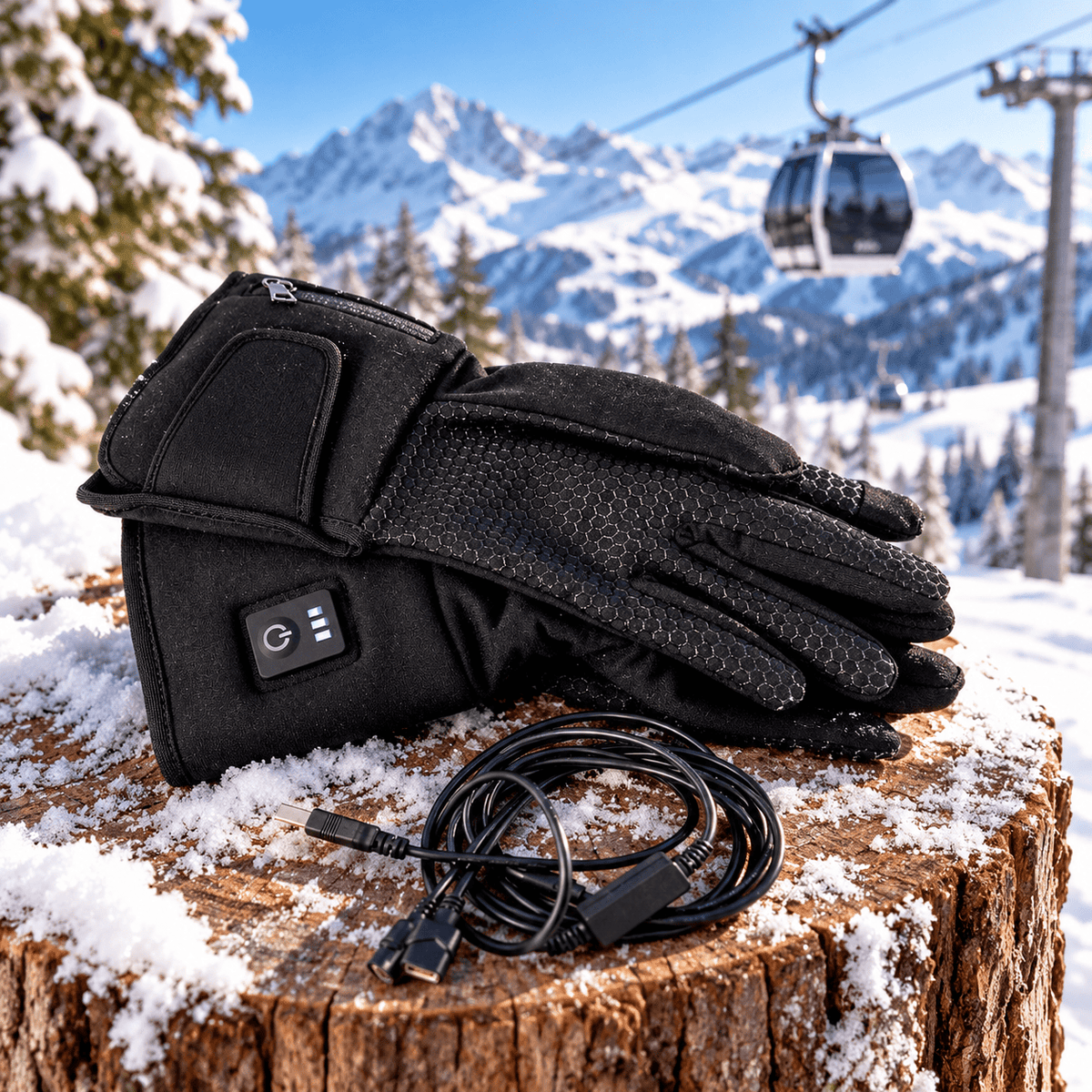
The trade-off is battery life and cost. But modern heated gloves like the Mind Smart Rechargeable Heated Gloves offer up to 8 hours of continuous warmth on a single charge, with three adjustable heat settings, enough for most photography sessions.

Heated gloves cost more upfront, but if you shoot seriously in winter, the difference in comfort and shot quality justifies the investment, you'll actually be able to work instead of just surviving.
Fit, moisture and glove care
Warmth is also about keeping your hands dry: sweat and dampness drain heat far faster than cold air, and a wet glove loses much of its insulating value.
Dry gloves at room temperature rather than on a radiator, which can degrade waterproof membranes and heating elements.
Avoid tight cuffs and tight fit across the knuckles, both restrict blood flow, the main reason fingers go numb even when the glove is warm enough.
How to Use a Camera with Gloves On
Operating a camera in gloves requires technique. Test your setup before you leave the house, because the trade-off between insulation and control shows up in specific places: small buttons, recessed dials, stiff focus rings, touchscreens and lens changes. Use the checklist below to find the weak points in your kit.
A dexterity and control-compatibility checklist
Run through this with your gloves on, ideally in the cold rather than indoors, because materials stiffen at low temperatures.
- Shutter button half-press: Can you feel the half-press point through the glove? If not, you'll miss focus or fire accidentally.
- Main and rear dials: Can you turn them one click at a time without looking? Recessed dials are the hardest; gloves with a grippy palm and fingertip help.
- Small buttons (AF-ON, menu, playback, function buttons): Can you locate and press them without taking the glove off? If not, consider programmable buttons or a custom control layout.
If a control fails the test, you have three options: change the glove, change the camera setup (custom buttons, a different dial function), or accept removing a glove briefly for that task. Learn more about maintaining hand dexterity in freezing temperatures to refine your technique. Knowing which tasks need bare fingers lets you plan the shoot so you're not constantly exposing skin.
Touchscreen-compatible gloves for camera operation
If your camera has a touchscreen, your gloves must work with it, either touchscreen-compatible material or a design that lets you remove individual fingers.
Test touchscreen compatibility before you buy: not all gloves that claim it work well, and some need firm pressure or are inconsistent.
You can explore more about touchscreen-compatible options in our guide to [touchscreen compatible heated gloves for winter photography].
Quick-access techniques for camera controls
Keep your gloves on as much as possible, every removal costs warmth and risks fumbling in the cold.
Develop muscle memory by practising button presses and dial adjustments with gloves on before your shoot. You'll be slower at first, but your fingers will learn where everything is without looking.
Use your dominant hand for most operations, and keep your non-dominant hand in your pocket or around a hand warmer when not actively shooting to preserve warmth where you need it most.
Mind Smart Rechargeable Heated Gloves →
For cameras with physical buttons and dials, heated gloves with thin insulation let you feel what you're doing. The Mind Smart gloves maintain full hand and fingertip sensation because the heating elements don't add bulk.
Warming hands between shots without exposing skin
A practical routine beats willpower. Between shots, put both hands in your pockets with a hand warmer, or slip shell mitts over your gloves. On a tripod waiting for light, keep hands in pockets and use a remote release or two-second timer. Change lenses inside your bag or jacket if possible, and put the glove back on immediately. The goal is to avoid repeated cycles of exposing skin and re-warming, which is what makes hands cold in the first place.
Using Hand Warmers for Photographers
Hand warmers are your backup plan when gloves alone aren't enough, especially on extremely cold days or long shoots.
Hand Warmer Placement and Layering Strategy
Place hand warmers in your pockets, not inside your gloves, direct skin contact can cause uneven heating and discomfort, while pockets create a buffer and distribute warmth more evenly.
Layer your hand protection: thin glove liners add insulation without bulk, then your main gloves. The air gap between layers traps heat, working better than a single thick glove.
Keep a spare hand warmer in your camera bag and rotate them between pockets so you always have warmth, this matters on shoots lasting more than a few hours.
How to Keep Camera Batteries Warm in Cold Weather
Camera batteries lose charge rapidly in cold: a battery that gives 200 shots at room temperature might only give 50 in freezing conditions, a serious problem on a long shoot.
Protecting Batteries During Extended Shoots
Keep spare batteries in an inside pocket close to your body heat, not in your camera bag or an outside pocket.
If you're shooting for hours, bring more batteries than you think you'll need.
The Mind Smart Portable Power Bank 66W keeps your batteries charged throughout the day. It delivers 66W output and holds enough charge to power multiple devices.

Layering Clothing and Gloves for Maximum Warmth
Your hands are part of your whole body's heat system: you can't keep them warm if your core is cold.
Keep moving, standing still is how you get cold.
Wear a hat and cover your neck: you lose significant heat through your head, and a neck gaiter or scarf prevents wind from reaching your core.
Eat something before you shoot, your body burns calories to generate heat, and a simple snack or warm drink before heading out makes a measurable difference.
Common Mistakes When Keeping Hands Warm in Winter Photography
Most photographers make the same mistakes repeatedly.
Don't remove your gloves more than necessary, every removal costs warmth and time.
Don't skip hand warmers on extremely cold days, gloves alone aren't always enough, and hand warmers are cheap insurance.
Don't ignore your batteries. Cold batteries die, it's a certainty.
Don't forget about your core warmth. You can't isolate your hands from the rest of your body.
Getting Started with Heated Gloves for Your Winter Photography
If you're shooting seriously in winter, heated gloves are worth the investment: they keep your hands warm without sacrificing the control you need to operate your camera.
The Mind Smart Rechargeable Heated Gloves are designed for exactly this: up to 8 hours of continuous warmth with three adjustable heat settings, ultra-thin construction that preserves dexterity, touchscreen compatibility so you can adjust settings without removing them, and waterproof, breathable fabric that keeps moisture out while preventing sweat buildup inside.
These gloves are field-tested by professionals in extreme cold, proving effective in temperatures as low as -35°C, delivering reliable warmth when you need it most.
Start with a single pair and a power bank: the Mind Smart Portable Power Bank 66W keeps your gloves charged throughout the day. For extended shoots, add the Mind Smart Direct USB Power Extension Cable to charge continuously without waiting for battery swaps.

Winter photography doesn't have to mean cold hands.
Frequently Asked Questions
What are the best gloves for winter photography?
The best gloves for winter photography balance warmth, dexterity, and touchscreen compatibility. Heated gloves with thin, stretchy designs work well because they maintain full finger mobility while providing consistent warmth. Look for gloves with waterproof, breathable fabric rated at 10,000mm water resistance and 10,000g breathability. Touchscreen-compatible models let you adjust camera settings without removing gloves. For extreme conditions, heated gloves with adjustable heat settings outperform passive insulation alone, with proven effectiveness in temperatures down to -38C.
How can I keep my hands warm while operating camera controls?
Use gloves specifically designed for camera work with reinforced thumb and forefinger areas for precise control. Heated gloves with three adjustable temperature settings give you flexibility to dial down heat when handling controls and increase it during breaks. Pair gloves with hand warmers tucked into pockets near your core to maintain overall hand warmth. Practice quick removal techniques for brief operations if needed, but touchscreen-compatible heated gloves eliminate this step entirely. Keep spare gloves in your bag if you need to swap them out during long shoots.
Do hand warmers actually work for photographers?
Yes, hand warmers work effectively when combined with proper gloves and layering. Single-use hand warmers provide 6-8 hours of warmth and fit easily in glove pockets or camera bags. For longer shoots in extreme cold, reusable hand warmers or heated gloves with extended battery life (up to 8 hours) are more reliable. The key is positioning warmers against your palms and core body areas, not just your fingertips. Hand warmers work best as a supplementary layer alongside insulated gloves rather than as a standalone solution.
How do I prevent my camera battery from dying in cold weather?
Cold dramatically reduces battery performance, lithium batteries can lose 30-50% capacity in freezing temperatures. Keep spare batteries in an inside jacket pocket close to your core body heat. Use an insulated camera bag with a heat pack to maintain ambient temperature around your camera and batteries. Minimise battery drain by reducing LCD screen use and turning off image stabilisation when not needed. Consider a portable power bank like the Mind Smart 66W Power Bank to charge batteries between shoots, or use a direct USB power extension cable to draw continuous power from a power bank in your bag during extended outdoor sessions.
Winter photography demands more than just a warm coat. Your hands need protection that doesn't compromise control. Heated gloves solve this problem by combining warmth with the thin profile you need for camera operation. Add proper layering, hand warmers for backup, and battery management into your routine, and you'll stay functional in conditions that would stop most photographers. Get started with Mind Smart heated gloves and keep shooting through the coldest months.



Leave a comment
This site is protected by hCaptcha and the hCaptcha Privacy Policy and Terms of Service apply.