

Last Updated: October 24, 2026
Quick Summary
Your fingers turn white cold because your blood vessels constrict sharply in response to cold or stress, cutting off blood flow to the skin surface. This is normal in mild form, but in Raynaud's phenomenon the response is extreme, causing numbness and colour changes that can last 15 to 20 minutes or longer.
- Raynaud's attacks follow three colour phases: white (15-20 minutes), blue or purple (varies), then red as blood flow returns.
- Most attacks last 15 to 20 minutes, though some resolve in minutes and others last an hour or longer.
- Common triggers include cold air, emotional stress, sudden temperature changes, holding cold objects, and nicotine use.
- Warm your fingers gradually under warm water, wrap them in a blanket, or rub your hands together to restore blood flow safely.
- Seek medical attention if attacks become more frequent, severe, or affect only one finger, as this may indicate secondary Raynaud's.
Table of Contents
- Why Fingers Turn White When Exposed to Cold
- Raynaud's Phenomenon Symptoms and Colour Changes
- Primary and Secondary Raynaud's: What's the Difference
- Common Triggers Beyond Cold Temperatures
- How to Warm Fingers During a Raynaud's Attack
- Raynaud's vs Frostbite Symptoms: Key Differences
- Heated Gloves as a Practical Solution for Raynaud's
- Managing Raynaud's: Your Next Steps
- Frequently Asked Questions
Why Fingers Turn White When Exposed to Cold
When your fingers turn white cold on a cold day, your body is restricting blood flow to your extremities to preserve core warmth. For most people this is mild, but for some the response is far more extreme, that's Raynaud's phenomenon.
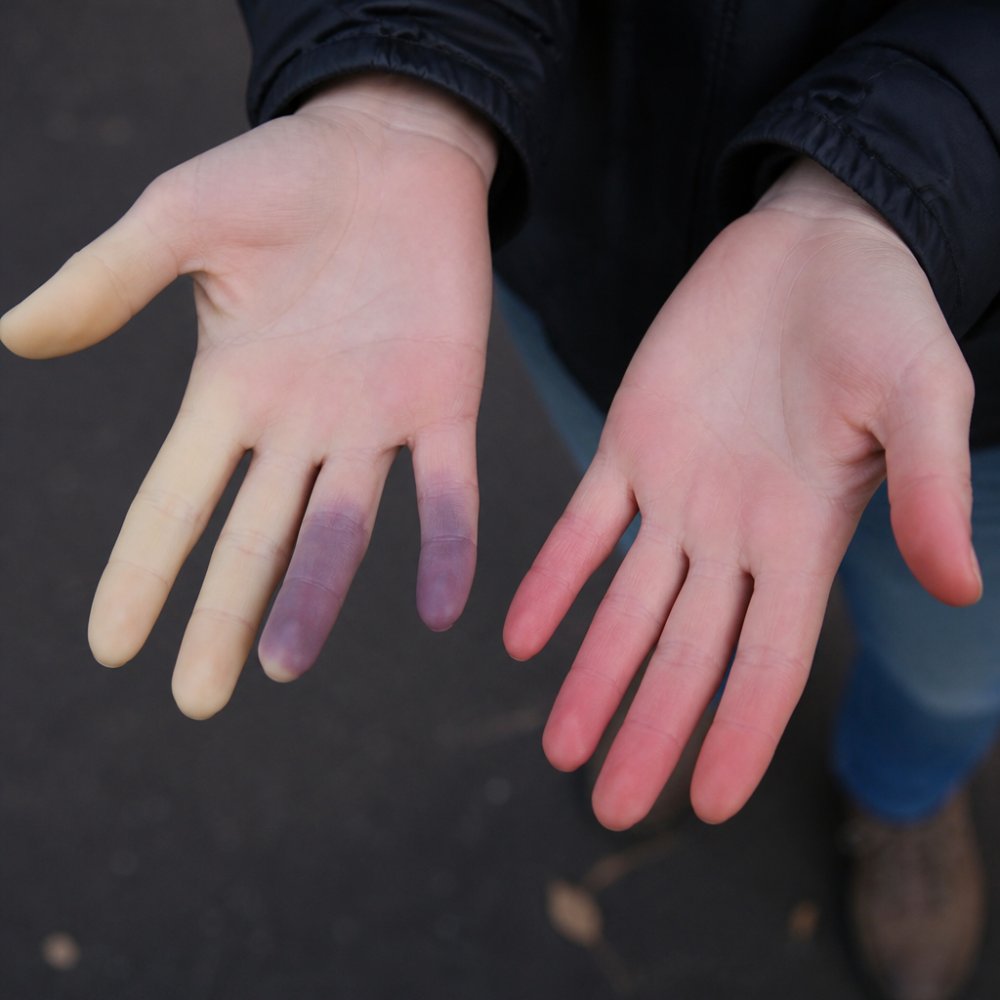
Raynaud's phenomenon is a condition where blood vessels in your fingers (and sometimes toes) overreact to cold or stress.
Understanding what's happening inside your body helps you manage it better.
How blood vessel constriction reduces circulation
Your blood vessels are lined with smooth muscle, which contracts in cold conditions, normal, as your body pulls blood away from your skin to keep your core temperature stable. In Raynaud's, this response goes into overdrive: the vessels clamp down hard, blood flow to your fingers drops dramatically, and within seconds your fingers lose their natural colour.
Here's what happens step by step:
- Cold or stress triggers your nervous system
- Blood vessels receive a signal to constrict
- Muscle tissue around the vessels tightens
This constriction can last from a few minutes to over an hour, leaving your fingers cold, numb, and sometimes painful.
The three-phase colour change explained
Most people with Raynaud's experience a predictable colour pattern during an attack.
Phase One: White (Ischemic Phase)
Your fingers turn white or pale because blood has stopped flowing to the surface of your skin, so it loses its normal pink tone.
Phase Two: Blue or Purple (Cyanotic Phase)
As the attack continues, your fingers may turn blue or purple as the oxygen in your blood gets used up while flow is still restricted.
Phase Three: Red (Reactive Hyperaemia)
When blood flow returns, your fingers turn red suddenly as fresh, oxygen-rich blood floods back into the tissue.
Raynaud's Phenomenon Symptoms and Colour Changes
Raynaud's affects more than finger colour, attacks bring a range of symptoms that can make everyday tasks difficult as your blood vessels clamp tight and your fingers are starved of oxygen and warmth.
Numbness, tingling, and pain during attacks
When blood stops flowing to your fingers, sensation changes, numbness, tingling, or pins and needles. In severe cases you lose grip strength, holding a pen becomes difficult, and using your phone feels clumsy.
Here's what you might experience during a Raynaud's attack:
- Numbness in your fingers or toes
- Tingling as sensation returns
- Throbbing or burning pain
Severity depends on how long the attack lasts and how completely blood flow stops, from slight numbness for a few minutes to painful weakness for an hour or more.
How long attacks typically last
Most Raynaud's attacks last 15 to 20 minutes, though some resolve in minutes and others drag on for an hour or longer. Length depends on how cold it is, your stress level, the severity of your Raynaud's, and whether you're actively warming your fingers.
Raynaud's attacks follow a predictable pattern of colour changes as blood flow to your fingers stops and then returns.
| Phase | Colour | Duration | What Happens |
|---|---|---|---|
| Phase One: Ischemic | White or pale | 15 to 20 minutes | Blood stops flowing to skin surface, fingers feel cold and numb |
| Phase Two: Cyanotic | Blue or purple | Varies | Oxygen in blood gets used up while flow remains restricted |
| Phase Three: Reactive Hyperaemia | Red | Minutes | Fresh oxygen-rich blood floods back, causing tingling or throbbing |
Primary and Secondary Raynaud's: What's the Difference
There are two types of Raynaud's, primary and secondary, and knowing which you have affects your treatment and outlook.
Primary Raynaud's is the most common form, occurring on its own without an underlying disease. Symptoms are usually mild and attacks are triggered mainly by cold.
Secondary Raynaud's happens alongside another medical condition and is usually more severe, with attacks triggered by cold, stress, or even mild temperature changes.
Secondary Raynaud's and underlying conditions
With secondary Raynaud's, your fingers turn white in cold because an underlying condition affects your blood vessels or immune system. Common culprits include autoimmune disorders, connective tissue diseases, and certain medications, which make your blood vessels more sensitive and reactive.
If you suspect you have secondary Raynaud's, it's important to see a doctor. They can identify the underlying condition and help you manage both the primary condition and your Raynaud's symptoms together.
Common Triggers Beyond Cold Temperatures
Cold is the most obvious trigger for Raynaud's attacks, but other triggers can set one off just as easily.
Emotional stress and sudden temperature changes
Stress is a powerful trigger. When you're anxious or under pressure, your nervous system activates a fight-or-flight response, blood vessels constrict, and your fingers turn white, even indoors in a warm room. For some people, stress is a stronger trigger than cold. Sudden temperature changes matter too: jumping from a warm room into the cold, or plunging your hands into cold water, confuses your body's temperature regulation.
Mind Smart Rechargeable Heated Gloves →
Here are common triggers for Raynaud's attacks:
- Exposure to cold air or water
- Emotional stress or anxiety
- Sudden temperature changes
Medication and nicotine as contributing factors
Some medications make Raynaud's worse: beta-blockers for heart conditions and high blood pressure can trigger more frequent attacks, as can certain migraine medications and decongestants. Nicotine is a powerful trigger too, it constricts blood vessels throughout your body, so smoking or nicotine use likely makes attacks more severe and frequent.
If you think your medication is making your Raynaud's worse, talk to your doctor. Don't stop taking your medication on your own. Your doctor can suggest alternatives or adjust your dose.
How to Warm Fingers During a Raynaud's Attack
When your fingers turn white cold and you're in the middle of an attack, you need to act fast. Warming your fingers properly can shorten the attack and reduce discomfort.
Immediate steps to restore blood flow safely
First, get somewhere warm, go indoors, close windows and doors, get away from cold air.
You can also:
- Wrap your hands in a warm blanket
- Put your hands in your pockets
- Rub your hands together vigorously
- Put on heated gloves such as Mind Smart Heated Gloves to start reopening the blood vessels
Avoid sudden temperature changes, going from freezing cold to very hot water can trigger another attack or damage your skin.
Preventing attacks in everyday situations
The best way to manage Raynaud's is to prevent attacks before they happen. Wear gloves before you leave the house in cold weather, and keep your core temperature up with layers.
For people with severe Raynaud's, heated gloves can make a real difference without bulky winter gear. The Mind Smart Rechargeable Heated Gloves, for example, provide up to 12 hours of continual warmth with three adjustable heat settings, are waterproof and breathable, and stay thin enough to maintain full dexterity.
Raynaud's vs Frostbite Symptoms: Key Differences
Raynaud's phenomenon and frostbite both involve your fingers turning white in cold. But they're very different conditions. Knowing the difference matters because frostbite is a medical emergency.
Raynaud's phenomenon is temporary: your fingers turn white because blood vessels constrict, and once you warm up, blood flow returns and your fingers return to normal with no permanent damage.
Frostbite is tissue damage caused by freezing. Ice crystals form in your skin cells, the tissue dies, and the damage is permanent, severe frostbite can lead to amputation.
Red flags that demand medical attention
Most Raynaud's attacks resolve once you warm your hands, but some symptoms mean you need to see a doctor.
Seek medical attention if:
- Your attacks are becoming more frequent or severe
- You have pain that doesn't go away after warming
- Your fingers show signs of tissue damage or ulcers
These could be signs of secondary Raynaud's or another condition that needs treatment. Early diagnosis and management can prevent complications.
If you suspect frostbite (blistering, blackened skin, or severe pain that doesn't improve with warming), seek emergency medical care immediately. Frostbite requires professional treatment.
Heated Gloves as a Practical Solution for Raynaud's
For people with frequent Raynaud's attacks, heated gloves offer real relief without requiring you to stay indoors all winter. The best combine warmth with practicality: thin enough to use your hands, and dry and comfortable throughout the day.
The Mind Smart Rechargeable Heated Gloves tick all these boxes: watertight heating elements cover your full hand and fingertips, three heat settings adjust warmth, and the ultra-thin construction maintains dexterity for tasks like using your phone or handling machinery. They deliver up to 8 hours of continual warmth on a single charge, and the waterproof, breathable fabric keeps hands dry and comfortable. They're effective in temperatures down to -35°C.
For people with Raynaud's, heated gloves can transform winter. You can work outdoors, exercise, or run errands without worrying about attacks. You stay warm and maintain your hand function.

If you're exploring heated gloves for Raynaud's relief, explore our comprehensive guide to heated gloves for Raynaud's relief. For a broader look at winter glove options, check our guide to the best winter gloves for Raynaud's sufferers. You can also purchase the Mind Smart Rechargeable Heated Gloves directly to start managing your symptoms today.
Managing Raynaud's: Your Next Steps
Raynaud's phenomenon is manageable. Understanding why your fingers turn white in cold is the first step; the second is preventing attacks and warming your hands when they happen. Identify your personal triggers, cold, stress, certain activities, so you can avoid or prepare for them. Protect your hands with gloves in cold weather, manage stress, stay hydrated, and keep your core temperature up.
Consider heated gloves if you have frequent attacks or work outdoors. The Mind Smart Rechargeable Heated Gloves offer proven effectiveness, maintaining dexterity while delivering up to 8 hours of warmth with three adjustable heat settings. They're waterproof, breathable, and designed for both outdoor work and daily winter activities. Get started with Mind Smart heated gloves and take control of your Raynaud's symptoms today.
Frequently Asked Questions
What is the condition when your fingers turn white when cold?
When fingers turn white in cold, you may have Raynaud's phenomenon, a condition where blood vessels in your extremities constrict excessively in response to cold or stress. This sudden narrowing reduces blood flow, causing fingers to turn pale or waxy-white, then potentially blue or purple as oxygen levels drop. The condition affects circulation to your hands and feet, and attacks typically resolve within 15 to 20 minutes once you warm up. Raynaud's phenomenon symptoms range from mild numbness to significant pain during rewarming.
How can I warm my fingers safely during a Raynaud's attack?
During a Raynaud's attack, move to a warm environment and place your hands in lukewarm (not hot) water for 10 to 15 minutes to gradually restore circulation. Avoid sudden heat exposure, which can cause pain. Swing your arms gently in a windmill motion to use centrifugal force to push blood back to your fingertips. Keep your core body warm by wearing layers, and avoid caffeine and nicotine, which constrict blood vessels further. Heated gloves with thermostat-controlled heat with three adjustable settings, like the Mind Smart Rechargeable Heated Gloves (£89.99), provide consistent warmth without the risk of burning sensitive skin during recovery.
How can you tell Raynaud's apart from frostbite?
Raynaud's phenomenon is reversible and causes temporary colour changes (white, then blue or purple) that resolve when hands warm up, with full recovery of sensation. Frostbite causes permanent tissue damage, blistering, blackening of skin, and numbness that persists even after rewarming. Raynaud's attacks last minutes to hours; frostbite develops over hours of extreme cold exposure. If your fingers show blistering, persistent discolouration, or tissue loss after cold exposure, seek medical attention immediately, as this indicates frostbite, not Raynaud's.
What is the difference between primary and secondary Raynaud's?
Primary Raynaud's occurs without an underlying disease and is usually milder, affecting mainly fingers and toes. Secondary Raynaud's develops as a symptom of an autoimmune or connective tissue condition, such as lupus or scleroderma, and is often more severe and may affect other body parts. Secondary Raynaud's typically begins later in life and can cause tissue damage or ulcers on fingertips. If you develop Raynaud's symptoms after age 30 or experience severe pain, ulcers, or skin changes, consult your GP to rule out secondary Raynaud's linked to an underlying condition.
If you're ready to manage your Raynaud's symptoms effectively, the Mind Smart Rechargeable Heated Gloves provide the warmth and dexterity you need. With up to 8 hours of continuous heat, three adjustable settings, and full touchscreen compatibility, you can stay warm and functional through your day. Free 24-hour shipping means you can start managing your symptoms immediately.




Leave a comment
This site is protected by hCaptcha and the hCaptcha Privacy Policy and Terms of Service apply.