

Last Updated: October 22, 2026
Quick Summary
Rechargeable USB hand warmers and heated gloves are the best alternatives to disposable hand warmers for daily commuting, since you charge them overnight and the running cost is close to nothing. Reusable sodium acetate click packs are the cheapest per-winter option if you can keep up a boiling-water reset routine.
- A five-day week from November to March is roughly 100 one-way commutes, or about 200 counting both directions.
- Rechargeable warmers typically take a couple of hours to charge fully and last longest on the low setting.
- Keep a warmer in an inside pocket before use, since lithium cells lose capacity in the cold.
- The Mind Smart Portable Power Bank at £32.99 tops up a warmer mid-journey and also charges your phone.
- The article ranks heated gloves first for daily commutes, rechargeable warmers second and disposable packs last.
Table of Contents
- Why Disposable Hand Warmers Fall Short on a Daily Commute
- Reusable Hand Warmers: Click-Activated and Gel Pack Options
- Rechargeable Hand Warmers: USB Power in Your Pocket
- How Long Do Rechargeable Hand Warmers Last?
- Air-Activated Warmers: What They Are and Why They Suit Occasional Use
- Heated Gloves for Commuting: When Warmth Needs to Cover Your Fingers
- Cost Per Use, Weather and Journey Length: A Decision Guide
- Frequently Asked Questions
Why Disposable Hand Warmers Fall Short on a Daily Commute
Disposable hand warmers are single-use heat packs that warm up when air reaches their contents, and they are a poor fit for a daily commute: you pay for a fresh pack every morning, roughly 100 packs across a typical winter, each binned by evening.
That is the core problem with alternatives to disposable hand warmers for daily commuting: the format suits one-off events, not routine.
A commuter buys the same thing over and over and gets nothing back.
The real cost of single-use warmers over a winter
Cost is where the case collapses fastest. Packs are cheap per pair, which makes them feel harmless, but multiply that by every commute from November to March and the total stops looking trivial.
The bigger cost is the ritual: remembering to buy, carry and open them early enough for the heat to build. Open a pack on the platform and the first ten minutes are lukewarm at best.
Waste, safety and the end-of-life problem
Every single-use warmer is landfill by dinner. Because they contain iron powder, salt and other ingredients, they usually go in general waste rather than recycling, and the wrapper adds to the pile.
There are practical constraints too. Packs must stay sealed until use, should not be crushed or punctured, and need checking against the manufacturer's instructions if you have circulation problems or reduced skin sensation, which matters for anyone commuting with Raynaud's, where numb fingers make it hard to judge how hot something really is against your skin.
Reusable Hand Warmers: Click-Activated and Gel Pack Options
Reusable hand warmers are sealed packs of sodium acetate gel that release heat when triggered and reset by boiling, making them the cheapest per-winter option for an organised commuter. You buy once, then recharge them in a pan rather than a shop.
How sodium acetate click packs work
A small metal disc starts a crystallisation reaction. The gel is supercooled, so the click gives it a nucleation point and it solidifies, releasing heat.
Heat output is strong at first, then tapers. Most packs give a useful burst rather than hours of steady warmth, which suits a short walk to the station better than a long wait on a cold platform.
Reactivation in boiling water and where it fits a commute
Resetting a click pack means boiling it until the crystals dissolve, then letting it cool. That takes time and a hob, and it is a job for the evening before, not the morning of.
They are pocket-sized, lightweight and genuinely reusable, but the boiling water step is the friction point. It fits a routine, not a rushed one.
Rechargeable Hand Warmers: USB Power in Your Pocket
Rechargeable hand warmers are battery-powered units charged by USB, and they are the best match for a predictable daily commute because the running cost is close to nothing. Charge overnight, switch on, repeat.
A full charge typically takes a couple of hours. Battery life depends on the heat setting: high drains fastest, low lasts longest. That trade-off is the whole decision.
A power bank removes the anxiety entirely. The Mind Smart Portable Power Bank at £32.99 gives you a top-up mid-journey, and it will also charge your phone, which is the more common emergency on a cold morning.

Charging time, battery life and power bank backup
Treat these three as one system. A warmer with modest battery life plus a power bank beats a warmer with a big battery and no backup, because the backup covers the day the battery is not full.
Two habits make rechargeables reliable:
- Charge every night, whether or not the indicator says empty
- Carry a short USB cable so a top-up does not depend on finding the right lead
How Long Do Rechargeable Hand Warmers Last?
Rechargeable hand warmers typically run a few hours on high and considerably longer on low, so quoted battery life should be read as "on low" unless stated otherwise. The honest answer depends on three things: heat setting, ambient temperature and battery age.
Reading the numbers honestly
Most manufacturers quote a single figure, almost always measured on the lowest setting at room temperature. A warmer advertised as lasting eight hours may deliver two to three on high in near-freezing conditions. Compare stated capacity in milliamp-hours (mAh) and watt-hours, and treat headline hours as a best case. A 5,000mAh warmer and a 10,000mAh warmer are not the same product with different labels; the larger cell buys more hours or more heat, not both.
What actually shortens runtime on a commute
Cold weather reduces effective battery life because lithium cells lose capacity in low temperatures. A warmer that lasts all day in October will not match that in January. Three habits help:
- Keep it warm before use. A warmer carried in an outside pocket starts cold; one kept in an inside pocket or a bag liner holds its charge better.
- Use the low or medium setting for the walk and high only for the wait. You rarely need maximum heat while moving.
- Do not leave it flat for months. Store it part-charged at room temperature over summer rather than empty in a cold shed.
Mapping runtime to a real commute
A typical commute is not one continuous cold exposure. It is a walk to the station, a wait on a platform, a train or bus journey, and a final walk. That pattern matters more than a single hours figure:
Mind Smart Rechargeable Heated Gloves →
| Commute pattern | Typical cold exposure | What to look for |
|---|---|---|
| Short walk, sheltered wait, under 30 minutes outside | 20-30 minutes | Any rechargeable warmer on low; runtime is not the constraint |
| Platform wait plus two walks, 30-60 minutes outside | 45-60 minutes | A mid-capacity warmer on medium, or a power bank top-up |
| Long walk or cycle each way, over an hour outside | 60+ minutes | High-capacity warmer, heated gloves, or both |
| Sub-zero and windy | Longer perceived exposure | Heated gloves plus a warmer; wind strips heat faster than still air |
Battery degradation is real but manageable. Lithium cells lose capacity gradually over hundreds of cycles, so a stated capacity and good treatment matter more than a headline number. Store at room temperature, avoid charging in a freezing bag, and do not leave it flat for months.

Air-Activated Warmers: What They Are and Why They Suit Occasional Use
Air-activated warmers are the classic single-use pack: iron powder oxidises when exposed to air, giving off heat for several hours.
Where they win is convenience: no charging, no boiling, no planning.
Where they lose is everything else.
For a match, a long walk, or a day at a cold venue, they are fine. For Tuesday morning on a station platform, they are an expensive habit.
Heated Gloves for Commuting: When Warmth Needs to Cover Your Fingers
Heated gloves warm the fingers themselves rather than the palm, and for anyone commuting with Raynaud's or arthritis that difference is the entire point.
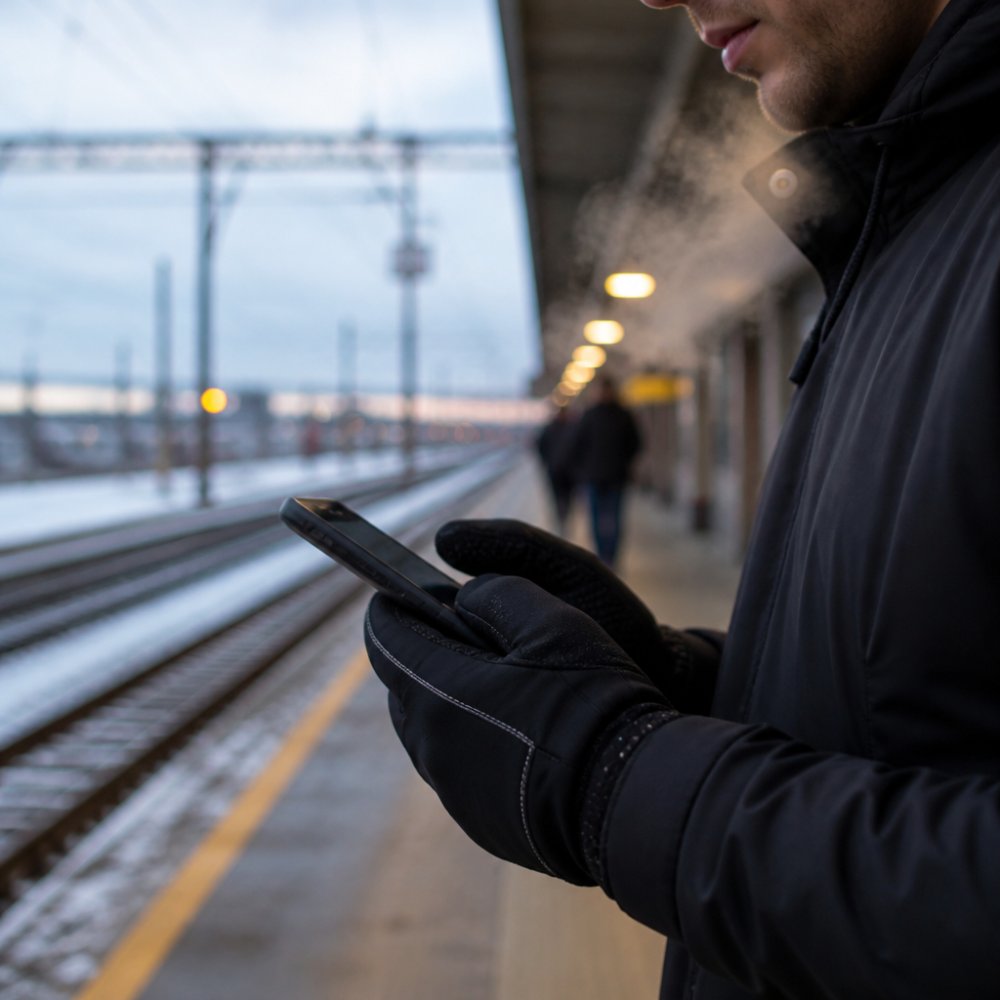
This is where our Mind Smart Rechargeable Heated Gloves at £89.99 fit. The heating elements cover the full hand and fingertips, there are three heat settings with push-button control, and the fabric is waterproof and breathable.
What to check before buying heated gloves
- Heating area: full hand and fingertips, not just the back of the hand
- Battery life at the setting you will actually use
- Waterproofing and breathability together: a waterproof glove that traps sweat is worse than a breathable one that lets a little damp in
Cost Per Use, Weather and Journey Length: A Decision Guide
The right choice comes down to three variables: how often you travel, how cold it gets, and how long you are outside. Match the warmer to the pattern, not to the weather forecast on any single day.
The cost-per-use maths a commuter actually needs
Disposable packs feel cheap because the unit price is low, but the cost never falls. A rechargeable warmer or pair of heated gloves spreads its purchase price across every commute for years.
Work it out in three steps:
- Count your cold-weather commutes. A five-day week across a typical November-to-March season is roughly 100 one-way journeys, or about 200 if you count both directions.
- Price the disposable habit. Multiply the cost of a pair of air-activated packs by the number of days you would actually use them. Even at a modest per-pair price, a daily habit across a season adds up to a recurring annual cost with nothing left at the end.
- Divide the reusable price by its working life. A rechargeable warmer or heated glove is a one-off purchase; spread over several winters of daily use, the cost per commute falls well below the disposable equivalent, and the gap widens every season you keep using it.
Exact figures depend on current retail prices, so check them yourself. The principle holds: disposables are a subscription you never cancel, reusables a capital cost that amortises.
Lifecycle and end-of-life: reusables are not automatically waste-free
A fair comparison has to include what happens at the end of life, not just the purchase price.
- Air-activated packs are single-use and usually go in general waste because of their iron powder, salt and wrapper. There is no realistic recycling route for a spent pack.
- Click-activated gel packs avoid repeat purchase but need boiling water to reset, which carries an energy cost per reactivation, and the gel pack itself eventually fails and is binned.
- Rechargeable warmers and heated gloves carry a lithium battery. That battery has a finite cycle life and must be disposed of properly at a household waste recycling centre or retailer take-back point rather than in general waste. The electronics and fabric add to the end-of-life burden, but the product is designed to last multiple seasons rather than one morning.
The honest conclusion is that reusables reduce waste per commute rather than eliminating it. The gain comes from replacing hundreds of single-use packs with one durable product, not from the product being magically waste-free.
Match the warmer to the journey
| Situation | Best option | Why |
|---|---|---|
| Daily commute, under 30 minutes | Rechargeable warmer or heated gloves | Low running cost, repeatable routine |
| Daily commute, over 45 minutes | Heated gloves | Fingers stay warm the whole way |
| Occasional cold event | Air-activated packs | No charging, no planning |
| Unreliable routine, no hob time | Rechargeable warmer plus power bank | No boiling step to forget |
| Raynaud's or arthritis | Heated gloves | Heat reaches the fingertips |
| Sub-zero and wet | Waterproof heated gloves | Breathable shell, sealed elements |
Weather and commute-length decision rules
- Under 30 minutes outside, mild cold: a rechargeable warmer on low is enough; runtime is not the constraint.
- 30-60 minutes outside, frosty: use medium heat and carry a power bank, or switch to heated gloves if your fingers are the problem.
- Over an hour outside, sub-zero or windy: heated gloves plus a warmer, and keep both warm before you set off.
Cost per use is the number that settles arguments. Disposable packs never get cheaper. A rechargeable unit spreads its price across every commute for years, and heated gloves do the same while warming the part that actually hurts.
Alternatives beyond dedicated warmers
You do not have to buy a warmer at all. Thermal liner gloves under ordinary gloves trap a layer of warm air for very little money.
For cycling commuters, bar mitts keep the wind off your hands entirely.
The honest ranking for a daily commute: heated gloves first, rechargeable warmers second, reusable click packs third if you are disciplined, and disposable packs last.
Frequently Asked Questions
Are rechargeable hand warmers suitable for daily commuting?
They can work well if you charge them the night before and your journey is within their heat window. Most rechargeable hand warmers run for a few hours per charge, which covers a typical commute plus waiting time. The catch is charging discipline: a flat warmer on a cold morning is useless. Keeping a compact USB power bank in your bag lets you top up on the move, and it doubles as phone backup. For anyone who commutes daily through winter, rechargeable hand warmers are the most practical pocket-sized swap for single-use packs.
How long do rechargeable hand warmers stay warm?
It depends on the model and the heat setting. Lower settings stretch the run time considerably, while the highest setting drains the battery faster. Many units deliver somewhere between two and eight hours per charge, with pocket-sized models at the shorter end. Cold weather reduces battery performance, so expect less on a freezing morning than in a mild one. If your commute is long or you stand around at a platform, a power bank backup or a warmer with a larger battery makes more sense than a slim pocket unit.
Are heated gloves better than rechargeable hand warmers for commuting?
They solve a different problem. Hand warmers heat a pocket or a palm; heated gloves heat the whole hand, including fingertips, which matters if you have Raynaud's, arthritis or a long walk to the station. Heated gloves for commuting also keep your hands free for a phone, bike handlebars or a luggage handle. The trade-off is price and fit: gloves need accurate sizing, and battery life varies by heat setting. For short journeys a pocket warmer is enough; for cold, wet or lengthy commutes, gloves do more.
What should I do with disposable hand warmers after use?
Air-activated disposable warmers cannot be recharged and should go in general waste once spent, not the recycling bin, because the contents include iron powder, salt and activated carbon. Check the packet for the manufacturer's instructions, as formulations vary. Never open a used warmer or compost it. The simplest way to cut the waste is to switch to a reusable or rechargeable option, which removes the daily throwaway entirely and usually pays for itself within one winter of commuting.
A daily commute in cold weather should not mean buying warmth by the packet. If your fingers are the part that suffers, the fix is a glove that heats them, not a pack that heats your palm.
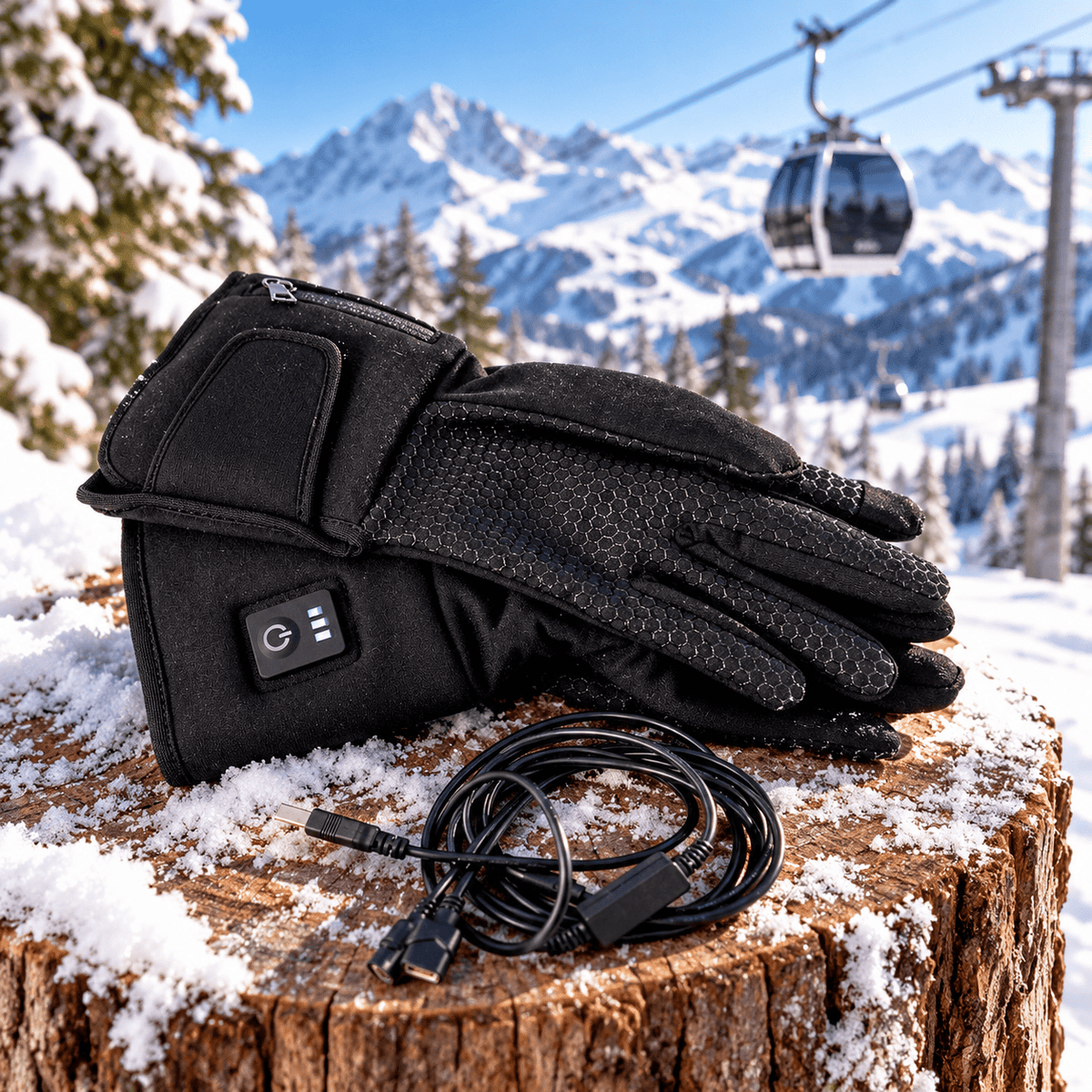
Mind Smart heated gloves are waterproof and breathable, heat the full hand and fingertips, run for up to 12 hours across three settings, and stay touchscreen-friendly so you never have to take them off in the cold. Get started with Mind Smart and stop budgeting for warmth you throw away.


Leave a comment
This site is protected by hCaptcha and the hCaptcha Privacy Policy and Terms of Service apply.