

Table of Contents
- What Makes Waterproof Heated Gloves Actually Breathable
- Battery Life and Heating Duration: A Heated Gloves Battery Life Comparison
- Heated Gloves for Motorcycle Winter Riding: What to Look For
- Best Heated Gloves for Raynaud's: Managing Symptoms in Cold Weather
- Heating Element Placement and Real-World Thermal Performance
- Battery Safety, Charging Standards, and Repairability
- How to Choose the Right Size and Fit for Winter Gloves
- Conclusion
- Frequently Asked Questions
Last Updated: October 4, 2026
What Makes Waterproof Heated Gloves Actually Breathable
Waterproof breathable heated gloves for winter keep rain and snow out while letting sweat vapour escape, so your hands stay warm instead of clammy. At Mind Smart, we build our rechargeable heated gloves around a fabric rated at 10,000mm waterproofing and 10,000g/m²/24h breathability, the balance most gloves get wrong.

Here is the part most buyers miss: a glove can be fully waterproof and still leave your hands soaked, because water from inside your hand matters as much as the rain outside.
Cheap "waterproof" gloves often use a solid rubber or PVC layer. It blocks rain perfectly and traps every drop of perspiration.
The practical test is simple. Look for a stated waterproof rating in millimetres and a stated breathability rating in g/m²/24h. If a listing gives neither, assume the glove is neither.
Battery Life and Heating Duration: A Heated Gloves Battery Life Comparison
Battery life decides whether heated gloves are useful or a novelty. Most run one to four hours on their highest setting, while lower settings stretch that considerably.
Compare battery life by setting, not headline figure, a glove claiming "up to 12 hours" is almost always quoting its lowest heat setting. Typical numbers:
| Heat Setting | Typical Use | Expected Runtime |
|---|---|---|
| Low | Commuting, light activity | Longest, often 6-12 hours |
| Medium | General winter wear | Mid-range, roughly 3-6 hours |
| High | Extreme cold, static work | Shortest, often 1-4 hours |
Our own Mind Smart Rechargeable Heated Gloves use a rechargeable lithium-ion battery with three thermostat-controlled settings, delivering up to 12 hours of heating on the lowest setting, the difference between a glove you rely on and one you leave in the drawer.
Heated Gloves for Motorcycle Winter Riding: What to Look For
For motorcycle winter riding, priorities shift: a glove that stays waterproof at speed, grips wet handlebars, and keeps heating elements over the fingertips where wind chill bites hardest.
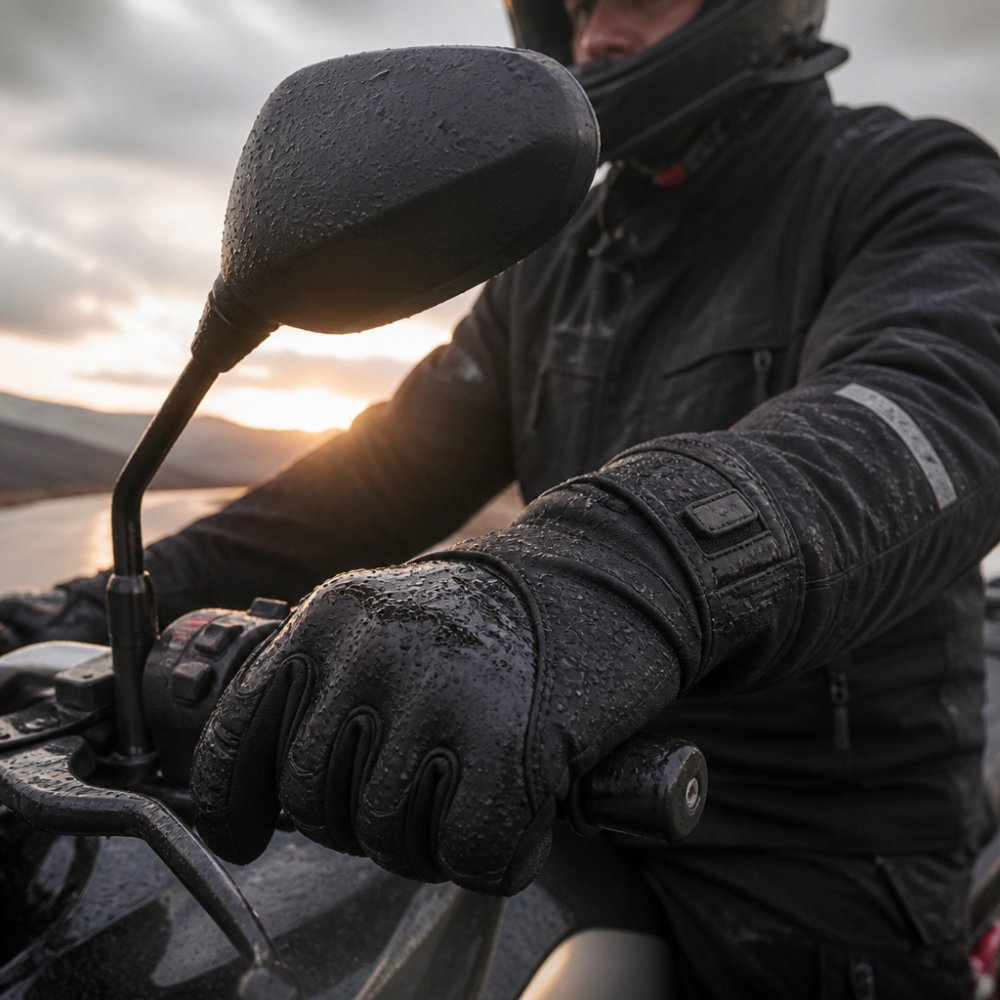
Three features separate a riding glove from a walking glove:
- Anti-slip grip: A silicone palm keeps your hands locked to wet bars when dexterity is reduced by cold.
- Adjustable cuffs: A cuff that seals over your jacket sleeve stops wind and rain running down your wrist.
- Impact protection: Reinforced knuckles and palm padding protect against vibration and minor impacts.
Touchscreen-compatible fingertips let you check a sat-nav or take a call at a lay-by without pulling a glove off in the cold, minor until you have done it in freezing rain.
Best Heated Gloves for Raynaud's: Managing Symptoms in Cold Weather
For Raynaud's, the goal is steady, even warmth rather than a blast of heat. In Raynaud's, blood vessels in the fingers and toes over-narrow in response to cold, cutting off circulation and turning the skin white, then blue, then red and painful.
That is why element placement matters for Raynaud's sufferers: a glove that only warms the back of the hand leaves the fingertips, where attacks start, cold.
A snug, second-skin fit beats a loose one every time: air gaps slow heat transfer, so a properly fitting glove warms your fingers faster and holds warmth longer. Our stretch-fit design is based on precise palm-width measurements for exactly this reason.
Heating Element Placement and Real-World Thermal Performance
Heating element placement decides whether a glove feels warm or actually keeps your fingers working. There are three common layouts, and they perform very differently:
| Placement | Coverage | Best For |
|---|---|---|
| Back-of-hand only | Warms the hand's top surface | Light commuting |
| Palm and back | Even hand warmth | General winter wear |
| Full hand and fingertips | Complete coverage to the tips | Raynaud's, motorcycling, outdoor work |
Most buying guides stop at that table. The useful question is what happens in the first ten minutes, when you decide whether the glove was worth the money.
Time-to-warm: what actually happens after you press the button
Across heated gloves, the fingertips lag the palm: the element sits in the back of the hand or palm, and heat must conduct through insulation and lining to reach the tips.
That lag is why element coverage matters more than headline wattage: a glove with higher heat output but only back-of-hand elements still leaves your fingertips cold on a slow walk or a static job.
Why lab ratings and field performance diverge
Lab ratings tell you what a glove can do under ideal conditions. Real-world performance depends on four variables no spec sheet captures:
- Wind: Airflow strips heat from the shell faster than still air. A glove that feels warm on a sheltered walk can feel cold at 50mph on a motorcycle.
- Moisture: Wet hands conduct heat away roughly 25 times faster than dry ones, so breathability directly affects how warm the glove feels.
- Fit: Air gaps between the fabric and your skin slow heat transfer. A loose glove warms slowly and cools quickly.
- Activity level: Working muscles generate heat; sitting still does not. A glove that is comfortable while walking may feel underpowered while stationary.
How to test a pair yourself
You do not need a lab to judge a glove. Charge the battery fully, put the glove on in a cold room, and time how long until you feel warmth at the fingertips, not just the palm. Then step outside into wind and repeat.
Mind Smart Rechargeable Heated Gloves →
This is where field experience beats a spec sheet. Our rechargeable heated gloves were trialled by trawlermen working in extreme cold and wet conditions in the North Sea, and held up where ordinary gloves failed, testing in genuine cold and damp tells you more than any number printed on a box.
Battery Safety, Charging Standards, and Repairability
Battery safety is the part of heated gear almost no buying guide covers, and it matters most. Lithium-ion batteries can fail if overcharged, punctured, short-circuited, or charged with a mismatched adapter. Buy from a seller that supplies a matched charger and follow the charge-time instructions.
Charging standards and what the markings mean
In the UK, electrical products sold to consumers must meet Electrical Equipment (Safety) Regulations 2016 guidance, and reputable sellers will mark their chargers with the UKCA symbol. That marking is a declaration that the product meets the applicable safety requirements, not a guarantee of quality, but its absence is a clear warning sign. A cheap pair of gloves arriving with an unbranded plug and no markings is not a bargain.
A few practical checks before you buy:
- The charger should be supplied with the gloves and matched to the battery voltage and capacity.
- The battery pack should carry a stated capacity in mAh and a stated voltage, not just a vague runtime claim.
- The instructions should state a maximum charge time and warn against leaving the pack on charge unattended overnight.
Storing and charging lithium-ion packs for longevity
Lithium-ion packs degrade fastest when stored fully charged, fully discharged, or at temperature extremes. Regular users typically charge to around half capacity for storage, keep the pack at room temperature, and top it up the night before use rather than leaving it on charge continuously.
Cold is the other enemy: a battery left in a freezing van overnight underperforms even when fully charged, because cold lithium-ion cells lose capacity until they warm up. Bring the pack indoors, let it reach room temperature, then charge it, never charge a frozen pack.
Repairability and warranty red flags
Heated gloves contain a battery, wiring, and heating elements, and any can fail. The most common failure is a broken wire where the cable flexes near the cuff or fingertip, usually after a season or two of heavy use.
Before you buy, check four things:
- Replacement batteries: Are they sold separately, and at what price? A glove with no spare battery option becomes disposable the moment the pack degrades.
- Warranty length and scope: Does the warranty cover the heating elements and wiring, or only the battery? Wire breakage is the most common fault, so a warranty that excludes it is worth little.
- Repair or replacement policy: Will the seller repair a failed element, or only replace the whole glove within a short window?
- Contact route: Is there a UK-based returns address and a way to reach support, or only an overseas form?
How to Choose the Right Size and Fit for Winter Gloves
Sizing is where most heated glove purchases go wrong, and it is avoidable.
Measure your dominant hand across the widest part of your palm, just below the knuckles, and match that to the manufacturer's size chart.
- Too loose: Heat escapes, grip suffers, and heating elements sit away from your skin.
- Too tight: Circulation is reduced, which makes cold fingers worse.
- Just right: The glove hugs your hand, heating elements touch the skin, and you keep full dexterity.
An ergonomic, low-profile design keeps your fingers free to grip tools, hold handlebars, or use a phone. Bulk is the enemy of dexterity, and dexterity is the whole point of a heated glove.
Conclusion
Getting the right pair of waterproof breathable heated gloves for winter comes down to the numbers that matter: waterproof rating, breathability rating, battery runtime at each setting, and element coverage.
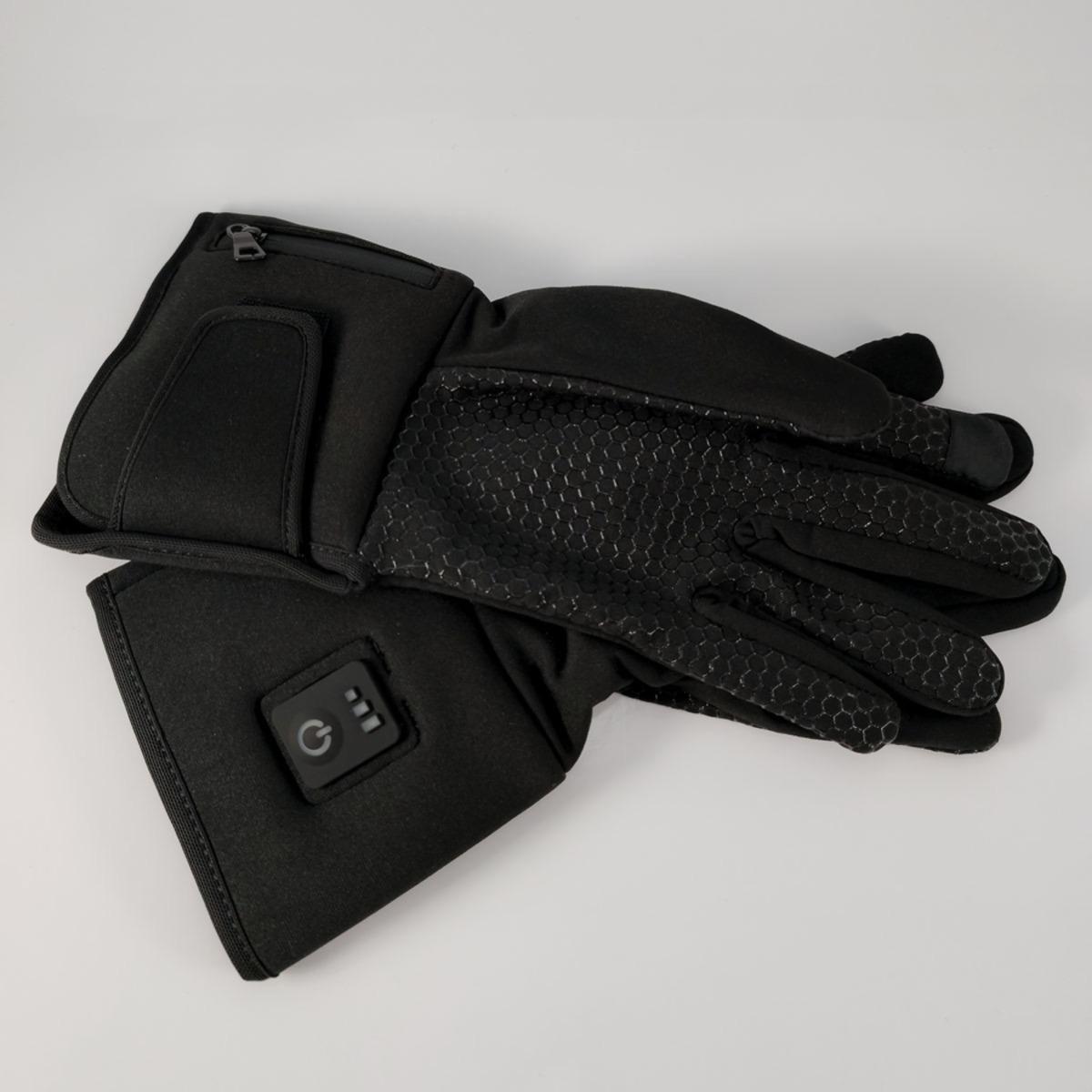
Mind Smart builds rechargeable heated gloves around exactly those priorities. Our gloves pair a 10,000mm waterproof and 10,000g breathable fabric with full fingertip heating, three thermostat-controlled settings, and up to 12 hours of warmth, all in a slim, touchscreen-compatible fit that keeps your hands working.
Frequently Asked Questions
Which heated gloves are the warmest?
The warmest waterproof heated gloves cover the full hand and fingertips, not just the back of the hand. Look for models with heating elements that extend to the fingertips and a thermostat with multiple settings. A snug, stretch-fit design also improves heat retention by reducing air gaps. Mind Smart's rechargeable heated gloves are field-tested to remain effective in temperatures as low as -35°C, making them a strong choice for extreme cold.
What is the difference between waterproof and water-resistant heated gloves?
Waterproof gloves keep water out completely, while water-resistant gloves only repel light rain or splashes. If you need gloves for heavy rain, wet snow, or motorcycle riding, choose waterproof. Breathability matters too: a waterproof membrane with a high g/m2/24h rating lets sweat vapour escape, so your hands stay dry from the inside. Water-resistant gloves often lack this breathability, leading to clammy hands.
Can heated gloves help with Raynaud's disease symptoms?
Heated gloves can help manage Raynaud's by keeping hands warm and promoting circulation. The best heated gloves for Raynaud's offer even heat distribution across the fingers and a low-profile fit that does not restrict movement. Look for adjustable heat settings so you can control temperature without overheating. Many users find that consistent warmth reduces the frequency and severity of attacks during cold weather.
How do I maintain the battery life of my heated gloves?
Store batteries at room temperature, charge them fully before first use, and avoid draining them to zero regularly. For a heated gloves battery life comparison, check the mAh capacity and expected runtime. Mind Smart Rechargeable Heated Gloves offer up to 12 hours of heating on the lowest setting. To extend long-term battery health, recharge every few months during off-season storage and avoid leaving batteries in extreme cold.
Cold hands should not decide whether you finish the ride, the shift, or the walk. Mind Smart heated gloves deliver waterproof, breathable warmth with full fingertip coverage, three heat settings, and up to 12 hours of battery life, all in a slim design that preserves your grip and dexterity. Get started with Mind Smart and keep your hands warm and working through the worst of winter.


Leave a comment
This site is protected by hCaptcha and the hCaptcha Privacy Policy and Terms of Service apply.