

Table of Contents
- ActionHeat vs ORORO Heated Gloves: How the Two Brands Compare
- ActionHeat Heated Gloves Review: Strengths and Weaknesses
- ORORO Heated Gloves Review: What Buyers Should Know
- Heated Gloves Battery Life: Runtime, Capacity and Long-Term Costs
- Waterproof Heated Gloves: How Each Brand Handles Rain and Sweat
- Heating Coverage, Dexterity and Fit: What Actually Matters
- Which Heated Gloves Should You Choose?
- Conclusion: Making the Right Call for Cold Hands
- Frequently Asked Questions
Last Updated: October 9, 2026
ActionHeat vs ORORO Heated Gloves: How the Two Brands Compare
The ActionHeat vs ORORO heated gloves comparison comes down to one question: do you want maximum heat output or maximum battery endurance? ActionHeat gloves lean toward aggressive warmth with higher-output heating elements, while ORORO prioritises lighter builds and longer runtimes. Neither is universally better. The right pick depends on how you use your hands in the cold.
This comparison from Mind Smart breaks down both brands on the specifications that actually matter: battery capacity, waterproofing, heating coverage and fit.

A quick definition before we go further. Heated gloves are battery-powered hand coverings with integrated heating elements, usually powered by a rechargeable lithium-ion battery and controlled through a push-button thermostat.
Two things shape every buying decision here. First, heating elements run on battery power, so runtime and warmth are always in tension. Second, waterproofing and breathability pull against each other too, and getting that balance wrong leaves you with clammy hands in the cold.
ActionHeat Heated Gloves Review: Strengths and Weaknesses
An ActionHeat heated gloves review usually highlights one thing first: heat output. The brand builds gloves for people who want to feel warmth fast, with heating elements that run hot across the back of the hand and fingers.
To make that concrete, it helps to look at the models you'll actually see on sale rather than the brand in the abstract. ActionHeat's range splits into three rough tiers:
- Thin liners, the lightest option, designed to sit inside a shell glove. Lowest heat output, shortest runtime, best dexterity.
- Mid-weight everyday gloves, the volume sellers, with a heating element across the back of the hand and, on most models, down the fingers.
- Heavy-duty winter gloves, the warmest and bulkiest, aimed at outdoor work and deep cold.
Across that range the pattern is consistent. ActionHeat uses higher-output heating elements than the endurance-first brands, and it pushes heat to the fingertips on most models rather than stopping at the knuckle. That is the real selling point: if your fingers go numb before your palms do, fingertip coverage matters more than a big mAh number.
That intensity is also the weakness. Higher heat settings drain the rechargeable battery quickly, so the quoted runtime often assumes a lower setting. On the top setting, expect a much shorter session than the box suggests. This is not a defect unique to ActionHeat, it is how lithium-ion cells behave under load, but the brand's bias toward output means you feel it sooner.
Where ActionHeat stands out:
- Strong heat output on the upper settings
- A broad range of styles, from thin liners to heavy-duty winter gloves
- Heating elements that reach the fingertips on most models
- A heat-up time that is noticeably quicker than endurance-first rivals
Where it falls short:
- Runtime drops sharply as you raise the heat
- Some models feel bulky, which costs you dexterity
- Battery packs add weight at the wrist
- Battery capacity varies widely between models, so a spec sheet from one glove tells you nothing about another
If you work outdoors in short bursts and want immediate warmth, ActionHeat makes sense. If you need steady heat for hours, keep reading.
ORORO Heated Gloves Review: What Buyers Should Know
An ORORO heated gloves review tends to focus on battery life and comfort. ORORO positions its gloves as lighter and less intrusive, with a rechargeable battery that favours endurance over raw heat.
The trade-off runs the other way. Lighter gloves and lower-output heating elements mean less intense warmth at the fingertips, which matters if you have poor circulation or Raynaud's. The heat is there, but it's gentler.
What buyers tend to like:
- Slimmer profiles that preserve dexterity
- Battery life that holds up better on mid settings
- Comfortable liners and a softer feel inside
What to watch:
- Fingertip warmth can feel weak in deep cold
- Waterproofing varies by model, so check each spec sheet
- Heat-up time is slower than ActionHeat
Neither brand publishes standardised runtime figures across all heat settings, which is exactly why we test the way we do below.
Heated Gloves Battery Life: Runtime, Capacity and Long-Term Costs
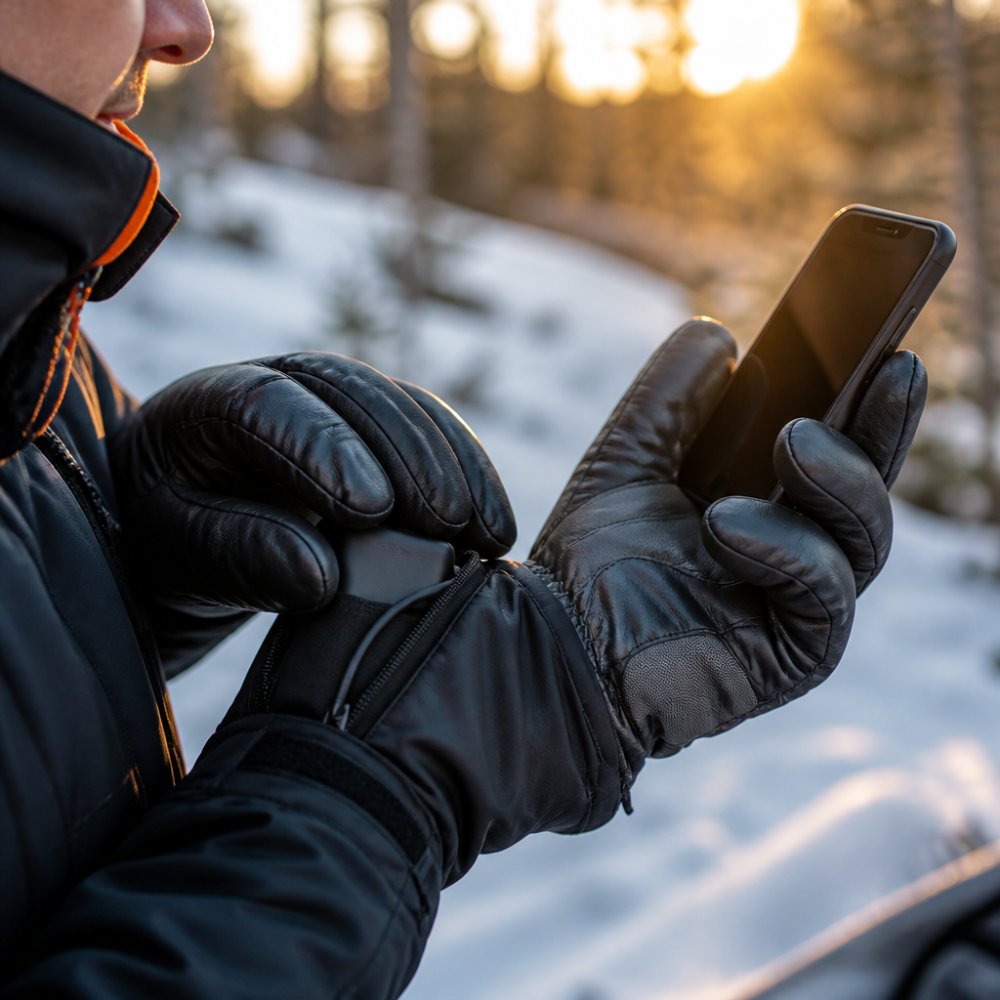
Heated gloves battery life depends on three things: battery capacity, the heat setting you use, and the outdoor temperature. A larger lithium-ion battery, measured in mAh, gives you more runtime, but cold weather reduces how much of that capacity you can actually use.
Most competitors stop there. The gap they leave is the part that decides what you actually pay over the life of the gloves: how the battery is charged, whether it can be replaced, and what that replacement costs.
Here's the honest part most reviews skip. A glove that promises eight hours rarely delivers eight hours on its highest setting. Runtime claims usually refer to the lowest heat setting in mild conditions.
| Factor | What It Means | What to Check |
|---|---|---|
| Battery capacity (mAh) | Raw stored energy | Higher mAh, longer runtime, but only within the same glove |
| Heat setting | Power draw per hour | Top setting drains fastest |
| Outdoor temperature | Cold reduces usable capacity | Expect less in deep cold |
| Charging time | How long to refill | Matters if you only own one battery |
| Replacement batteries | Long-term cost | Check if spares are sold separately |
| Warranty | Cover on cells and electronics | Check what it excludes |
Charging time is the spec nobody quotes. A single battery pack typically takes a few hours to charge from empty.
Long-term ownership costs matter more than the sticker price. Lithium-ion cells degrade with every charge cycle, and a glove battery that is charged daily through a winter will hold noticeably less by its second or third season.
Mind Smart Rechargeable Heated Gloves →
Before you buy, check three things:
- Whether replacement batteries are listed as a separate product
- The stated charging time, not just the runtime
- What the warranty covers, cells and electronics are often treated differently from the fabric and heating elements
A common pattern among buyers is to treat the battery as part of the glove. It isn't. Treat it as a consumable with a two-to-three-season life, price the replacement before you commit, and the runtime figures on the box become far less important than whether you can keep the gloves running.
Waterproof Heated Gloves: How Each Brand Handles Rain and Sweat
Waterproof heated gloves are judged on two fronts: keeping rain out and letting sweat escape. A glove that blocks water but traps moisture leaves your hands clammy, which feels colder than dry hands ever do.
This is where construction separates the good from the average. Look for a waterproof membrane paired with a breathable outer fabric. Water resistance ratings are often quoted as two numbers, one for waterproofing and one for breathability, and both matter.
Most complaints about "waterproof" gloves come down to moisture management. If sweat can't escape, the inside gets damp and the warmth drops. A breathable material lets vapour out while keeping liquid water from getting in.
What to look for:
- A stated waterproof rating, not just the word "waterproof"
- A breathable membrane to handle sweat
- Sealed seams around the heating elements
If you work with wet machinery or in maritime conditions, this section matters more than raw heat output.
Heating Coverage, Dexterity and Fit: What Actually Matters
Heating coverage and fit decide whether a glove is genuinely useful. A glove that heats only the back of the hand leaves your fingertips cold, and fingertips are where cold hurts most.
Dexterity is the other half of the equation. Thick insulation keeps you warm but turns your hands into oven mitts, which is useless if you need to grip tools or operate machinery. The best gloves balance thermal insulation against a slim, second-skin fit.
Sizing drives everything. A loose glove lets heat escape and cold air in. A snug fit, measured by palm width, keeps warmth locked against your skin. This is why we recommend measuring your palm before ordering from any brand.
Which Heated Gloves Should You Choose?
The right choice depends on your use case, not on which brand is "best" in the abstract. Here's how we'd decide.
Choose ActionHeat if you want fast, intense heat for short outdoor bursts and don't mind a shorter runtime on the top setting.
Choose ORORO if you want a lighter glove with steadier battery life and gentler warmth.
Choose Mind Smart if you need both warmth and endurance in genuinely wet, cold conditions. Our Mind Smart Rechargeable Heated Gloves are built around watertight heating elements and a breathable, waterproof fabric that keeps rain out and sweat moving. The heating area covers the full hand and fingertips, so you're not left with cold fingers. At £89.99, they're priced above the budget end of the market, and here's what that buys: three thermostat-controlled heat settings, a stretch-fit design based on palm width, and an ultra-thin build that preserves the dexterity you need for tools and machinery.
For anyone managing Raynaud's or arthritis, the combination of full fingertip warmth and a slim fit matters more than peak temperature. You want consistent heat you can actually feel while still using your hands.
Conclusion: Making the Right Call for Cold Hands
The ActionHeat vs ORORO heated gloves comparison has no single winner, because the two brands solve different problems. ActionHeat gives you heat fast. ORORO gives you a lighter glove and steadier battery life. The gap is in what happens when conditions get genuinely wet and cold, and your hands still need to work.
If cold, damp weather and real dexterity are your priorities, that's where Mind Smart comes in. Our gloves pair a waterproof, breathable build with full-hand heating coverage, three heat settings and a fit designed to keep warmth where it belongs. Get started with Mind Smart and keep your hands warm and working all winter.
Frequently Asked Questions
Are ActionHeat or ORORO heated gloves better for skiing?
Both brands make gloves suitable for skiing, but the better choice depends on your priorities. ActionHeat typically offers more budget-friendly options with decent warmth, while ORORO focuses on slimmer designs that preserve dexterity. For skiing, look for gloves with at least 3 heat settings, a secure cuff that fits over or under jacket sleeves, and a battery rated for 4 or more hours on medium. If you need fingertip warmth and touchscreen use, check the heating element coverage before buying.
How long do ActionHeat and ORORO heated gloves stay warm?
Runtime varies by model and heat setting. Most ActionHeat and ORORO gloves run between 2 and 6 hours on high, stretching to 8 or 10 hours on the lowest setting. Battery capacity, measured in mAh, is the biggest factor. Cold conditions also reduce effective runtime because lithium-ion batteries lose efficiency in low temperatures. If you need all-day warmth, look for gloves with larger batteries or carry a spare pair. Always check the claimed runtime at each heat setting, not just the maximum.
Are ActionHeat and ORORO heated gloves waterproof?
Many models from both brands are water-resistant rather than fully waterproof. That means they handle light rain and snow but may soak through in heavy, prolonged wet conditions. If you work outdoors or face persistent rain, look for gloves with a stated waterproof rating, sealed seams, and a breathable membrane to prevent sweat build-up. Waterproof heated gloves cost more but last longer in wet environments. Always check the specific model's rating before relying on it for wet weather.
Which heated gloves offer better dexterity?
Dexterity depends on insulation thickness, liner design, and how the heating elements are placed. ORORO gloves tend to have a slimmer profile than many ActionHeat models, which can help with grip and touchscreen use. ActionHeat offers a range of styles, some bulkier than others. For tasks like operating machinery, handling tools, or using a phone, prioritise gloves with thin heating elements, a stretch-fit design, and a snug palm measurement. Bulkier gloves provide more warmth but reduce finger mobility.



Leave a comment
This site is protected by hCaptcha and the hCaptcha Privacy Policy and Terms of Service apply.