
Quick Summary
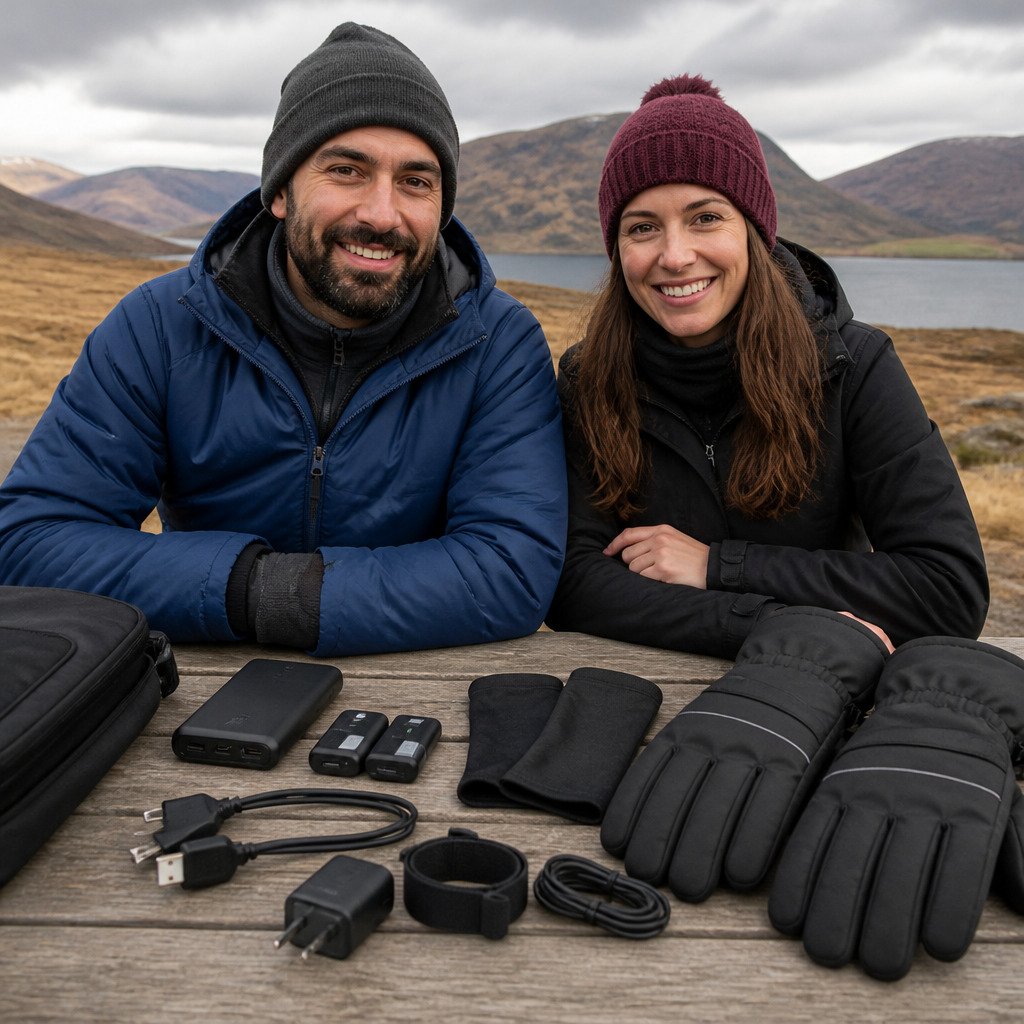
The essential heated glove accessories for long trips are spare batteries, a power bank with a charging cable, and a laundry bag for washing. Carry enough charge for the longest stretch without an outlet, not just the first day, because cold weather drains batteries faster. Packing backup power and protecting the gloves keeps them working when you need them most.
- Cold weather hides battery charge, so plan for less runtime than the warm-room figure.
- Carry spare batteries inside a jacket pocket to keep them warm and ready.
- The Mind Smart Portable Power Bank (£32.99) offers 66W output and 10,000mAh capacity.
- Use the Mind Smart Laundry Bag (£8.99) to protect gloves when washing them.
- Test the full power chain at home before departure and carry a backup source.
Table of Contents
- Why Accessories Matter More on Long Trips Than Gloves Alone
- Keeping Heat Going: Spare Batteries and How Long They Last
- Charging on the Move: Power Banks and Direct Power Cables
- Choosing a Heated Glove Battery Charger for Multi-Day Trips
- Heated Glove Liners: When They Help and When They Get in the Way
- Heated Glove Care and Maintenance While Travelling
- Building Your Heated Glove Kit Before Your Next Trip
- Frequently Asked Questions
Why Accessories Matter More on Long Trips Than Gloves Alone
Heated gloves are only as useful as the power keeping them running, and the right accessories help determine whether that power holds up.
This article looks at the accessories that keep heated gloves working on long trips.
Most people focus on the gloves when planning a trip. Fewer think about how they will be charged on day three, or where they will be stored overnight.
Keeping Heat Going: Spare Batteries and How Long They Last
The simplest way to avoid a cold-handed afternoon is to carry a spare set of power. Our practical advice is to pack enough charge for the longest stretch of your trip, not the first day alone, and to understand why a battery that performed at home can let you down in the field.
Battery life depends on the heat setting you choose. Running on a lower setting for part of the day stretches charge, while using the highest setting constantly will drain a battery faster, so reserve it for the coldest periods.
Why cold weather drains heated glove batteries faster
Lithium-ion cells do not store less energy in the cold, they deliver it less efficiently. As temperature drops, the chemical reaction inside the cell slows, internal resistance rises, and the voltage sags under load. The glove's control circuit reads that sag as a depleted battery and either dims the heat or shuts off, even though charge remains. Warm the battery back up and some of that apparent loss reverses.
The practical consequences for a long trip are threefold:
- Shorter runtime per charge. A battery that gives eight hours in a warm room may give noticeably less on a sub-zero morning. Treat the 8-hour figure as a warm-condition guide and build in a margin.
- Earlier cut-off under load. The highest heat setting draws the most current, so it is the first to trigger a low-voltage cut-off in the cold. Stepping down a setting can keep the glove running when the top setting would not.
- Slower charging in the cold. Charging a cold battery is also restricted; most cells should be brought back to room temperature before charging to avoid stressing them.
Mitigation that actually works
- Carry batteries close to the body. An inside jacket pocket keeps a spare battery near body temperature, so it is ready to deliver full output when you swap it in.
- Swap early, not late. Rotating a warm spare in before the first battery sags avoids the cold cut-off entirely.
- Insulate the battery pocket. A simple fleece liner or hand-warmer sachet next to the battery (not directly against the cells) slows cooling.
- Charge at room temperature. Bring batteries and power banks indoors or into a warm vehicle before charging, and never charge a frozen battery.
- Accept the margin. Plan for roughly two-thirds of the warm-weather runtime in genuinely cold conditions, and carry one more battery than the maths suggests.
Batteries also lose capacity over time, so a battery that has seen several seasons may underperform a new one. If you plan to rely on heat through a whole trip, check your battery's performance before you leave, not once you are already in the field.
The cold does not empty a heated glove battery so much as hide its charge. Keep spares warm, swap early, and plan for less runtime than the warm-room figure suggests.
Charging on the Move: Power Banks and Direct Power Cables
Charging is where long trips get complicated.
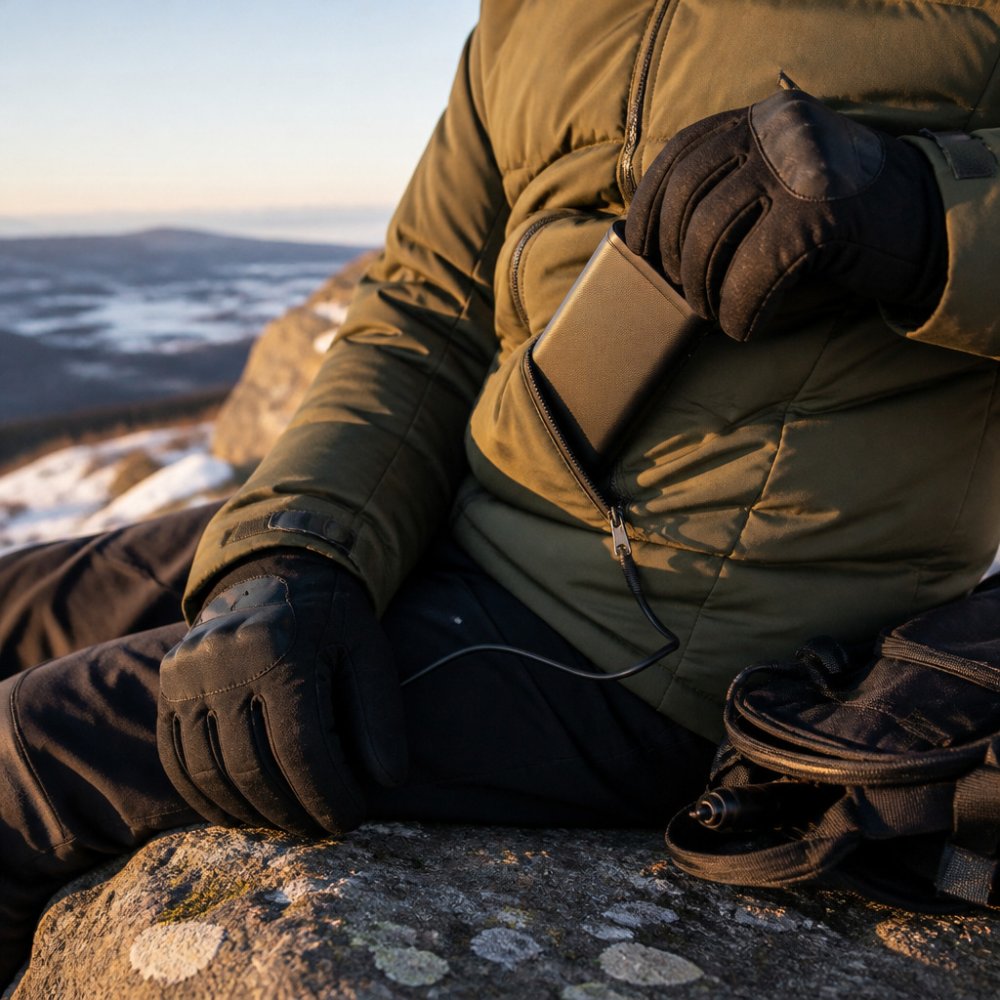
There are two distinct ways to run heated gloves from external power, and they suit different trips.
Swappable battery charging. The Mind Smart Battery Charging Extension Cable (£20.99) is a USB extension cable for charging batteries from power sources such as power banks or car USB ports.

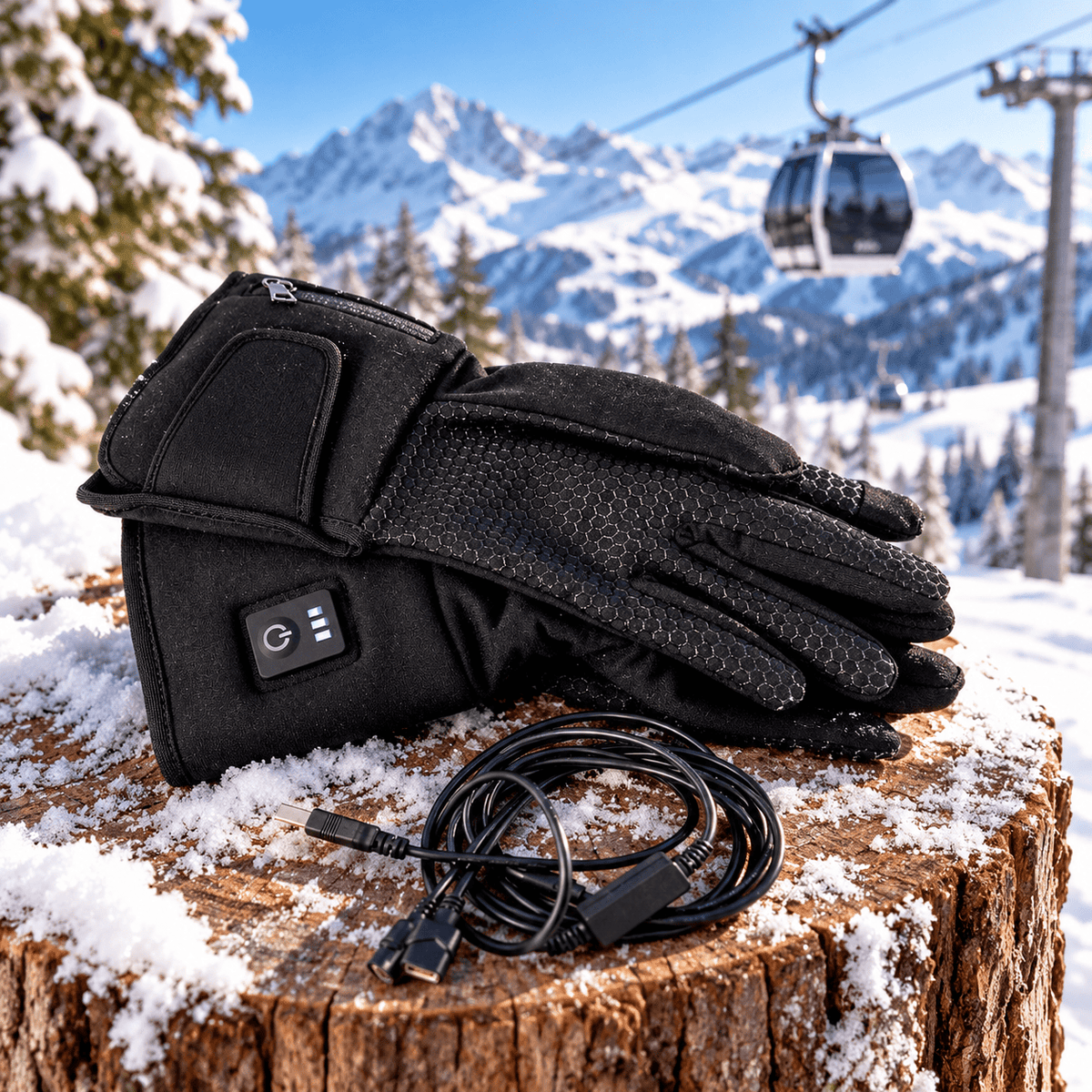
Direct continuous power. The Mind Smart Direct USB Power Extension Cable (£24.99) connects the gloves straight to a power bank, allowing continuous power without repeatedly swapping batteries.

The Mind Smart Portable Power Bank (£32.99) delivers 66W output with a 10,000mAh capacity for powering rechargeable heated gear.

Matching a power bank to your gloves
Not every power bank will run heated gloves well. Before you rely on one for a trip, check four things:
- Output wattage. A power bank rated well below the glove's draw may not run the gloves reliably. The 66W output of the Mind Smart bank is suited to rechargeable devices.
- USB port type and cable. Confirm the bank's port matches the cable you carry, USB-A versus USB-C is the most common mismatch. Carry the cable you tested with, not a substitute.
- Pass-through charging. Some banks can charge and discharge at the same time; others cannot. If you plan to top up the bank from a vehicle while it runs the gloves, check this before you leave.
- Cold-weather behaviour. Power banks can perform poorly in low temperatures. Keep the bank in an inside pocket close to your body, and avoid leaving it in an unheated vehicle overnight.
Planning power for a multi-day trip
A common pattern among long-trip users is to size the power budget around the longest stretch without a socket, not the first day. Work it out in sessions rather than hours: if a full battery gives you a morning of heat on a mid setting, and you have two batteries plus a 10,000mAh bank, you have roughly three sessions before you need mains power.
Do not rely on a single charging source for a multi-day trip. If your only power bank fails or runs flat in the cold, you lose heat entirely. Carry a backup bank or a second battery, and test the full chain, bank, cable, glove, at home before departure.
Label your cables. On a long trip it is easy to mix a charging cable with a data cable, and a data-only cable will not deliver power. A small strip of tape on each connector saves a cold afternoon of troubleshooting.
Mind Smart l Portable Power Bank 66W →
The table below sums up the three charging accessories the article covers and what each one is best suited to.
| Accessory | Best for | Key difference |
|---|---|---|
| Battery Charging Extension Cable (£20.99) | Topping up between sessions | Keeps the glove's own battery and thermostat |
| Direct USB Power Extension Cable (£24.99) | Continuous power on long shifts | Runs straight from a power bank, no swapping |
| Portable Power Bank 66W (£32.99) | Charging away from outlets | 10,000mAh capacity, rated for rechargeable gear |
Choosing a Heated Glove Battery Charger for Multi-Day Trips
A battery charger matters most on trips longer than a day. If you can only recharge once every 24 hours, you need to plan around that schedule.
When comparing options, consider four things:
- Charging time: Faster charging means less waiting at camp or in a vehicle.
- Portability: Chargers that fit into a pocket or bag are easier to carry on foot.
- Power source compatibility: USB charging covers most situations, including car ports and power banks.
- Capacity: Higher capacity keeps you warm for longer between charges.
Battery runtime figures are a useful reference point for planning, but real-world results vary with temperature, heat setting and battery age.
Watch out: do not rely on a single charging source for a multi-day trip. If your only power bank fails or runs flat in the cold, you lose heat entirely.
Heated Glove Liners: When They Help and When They Get in the Way
Liners sit beneath heated gloves and add a layer of insulation. They can help in extreme cold by trapping warm air and reducing heat loss. They also add bulk, which affects dexterity.
For people with arthritis or Raynaud's who need fine finger movement, a thin liner is often a better choice than a thick one.
Our advice is to test liners at home before a trip. Put on the full combination, try to grip a phone and open a zip.
Heated Glove Care and Maintenance While Travelling
Good care can help extend the life of heated gloves and their accessories. The Mind Smart Laundry Bag for Heated Gloves (£8.99) is designed to protect the gloves in the wash. It has a strong protective mesh, a zip closure and the Mind Smart logo, and it helps keep the gloves' zips from tangling with other items.
A few habits make a difference on the road:
- Store the Direct USB cable in a cool, dry place and avoid sharp bends, which can damage the small USB connectors.
- Keep cables free from tight knots when packing.
- Dry gloves fully before storing them, especially after exposure to wet conditions.
- Avoid leaving batteries and power banks in hot cars or direct sunlight.
Watch out: never put heated gloves in a washing machine without the laundry bag. Snagged zips and damaged heating elements are common causes of early failure.
Building Your Heated Glove Kit Before Your Next Trip
A complete kit covers power, charging, protection and care. For most long trips, we recommend:
- Heated gloves for daily warmth and dexterity.
- Portable Power Bank 66W for charging away from outlets.
- Battery Charging Extension Cable for charging on the move.
- Direct USB Power Extension Cable for continuous heat on long shifts.
- Laundry Bag to protect gloves when washing.
- Liners, if your activity needs extra insulation and you can still work your fingers.
Pack your kit at least a day before departure, test each item, and check that every cable and battery is fully charged. Carry a spare power source for any trip longer than a single day.
Heated glove accessories are not extras. On a long trip they decide whether your gloves keep working when you need them most.
Frequently Asked Questions
What accessories do you need for heated gloves on a long trip?
For a long trip, the essentials are a power bank with enough capacity to recharge the gloves several times, a direct USB power cable so the gloves can run from the bank while the batteries are flat, a spare set of batteries if your gloves use removable packs, a charger for topping up at overnight stops, and a laundry bag to protect the gloves when washing. Thin glove liners are optional but useful in the coldest conditions. The Mind Smart Portable Power Bank 66W (10,000mAh, £32.99), Mind Smart Direct USB Power Extension Cable (£24.99) and Mind Smart Laundry Bag (£8.99) are useful core items, with the Mind Smart Battery Charging Extension Cable (£20.99) adding flexible charging from power banks or car USB ports.
How can you keep heated glove batteries charged while travelling?
The most reliable approach is to carry a power bank sized for the trip and charge it each night from a mains socket or car USB port. Connecting the gloves directly to a power bank with a direct power cable can reduce how often you need to swap or charge batteries during the day. The Mind Smart Battery Charging Extension Cable can help when you need to charge from a power bank or car USB port. Plan charging around your day: top up the power bank while you eat or rest, and keep cables dry and untangled in an inside pocket.
How long do rechargeable heated glove batteries last?
Run time depends on the heat setting you use, the outside temperature and the battery capacity. Heated gloves are often rated for several hours of warmth, and runtime is typically longest on the lowest heat setting. Higher settings and very cold conditions shorten that time. Battery capacity also declines gradually with repeated charging cycles, so a battery's runtime may decline over time with regular use. Carrying spare power is the simplest way to cover a long day regardless of battery age.
Are heated glove liners useful in very cold weather?
Some people wear thin liners under gloves for an extra layer of insulation, which can matter in cold conditions. The downside is bulk: a thick liner can reduce finger dexterity, so a slimmer style is often easier to work with. Test the combination before a trip so you know whether your grip and touchscreen use still work comfortably.



Leave a comment
This site is protected by hCaptcha and the hCaptcha Privacy Policy and Terms of Service apply.