

Quick Summary
Choose heated gloves arthritis sufferers can actually use by testing dexterity first, not just warmth. Pick a fingered format for precise tasks, check thin pliable fingertips, and confirm a snug fit at the knuckles. Then run a timed trial of everyday tasks with the gloves on.
- List your three hardest everyday tasks first; they are your benchmark for every pair.
- Fingered gloves suit precision tasks, while mittens give the most warmth but little finger movement.
- Measure palm width just below the knuckles and compare it with the size chart.
- Time picking up ten small items with bare hands and with gloves on; slower gloved times signal lost dexterity.
- Start on the lowest heat setting and check your skin every twenty to thirty minutes.
Table of Contents
- Why Finger Dexterity Matters More Than Warmth Alone
- How Heated Gloves May Ease Arthritis Hand Pain and Stiffness
- Heated Gloves vs Compression Gloves for Arthritis
- Heated Gloves for Rheumatoid Arthritis: What to Check First
- Step-by-Step: Choosing Gloves That Protect Your Grip
- Heating Controls, Wear Time and Safe Use
- Booking Your Trial Pair of Mind Smart Heated Gloves
- Frequently Asked Questions
Why Finger Dexterity Matters More Than Warmth Alone
Most heated glove listings lead with temperature settings and battery life.
Finger dexterity is the ability to make precise, controlled movements with your fingers and thumb. Arthritis can reduce it through pain, stiffness, swelling and loss of grip strength.
This is where the design of the glove matters as much as its heating.
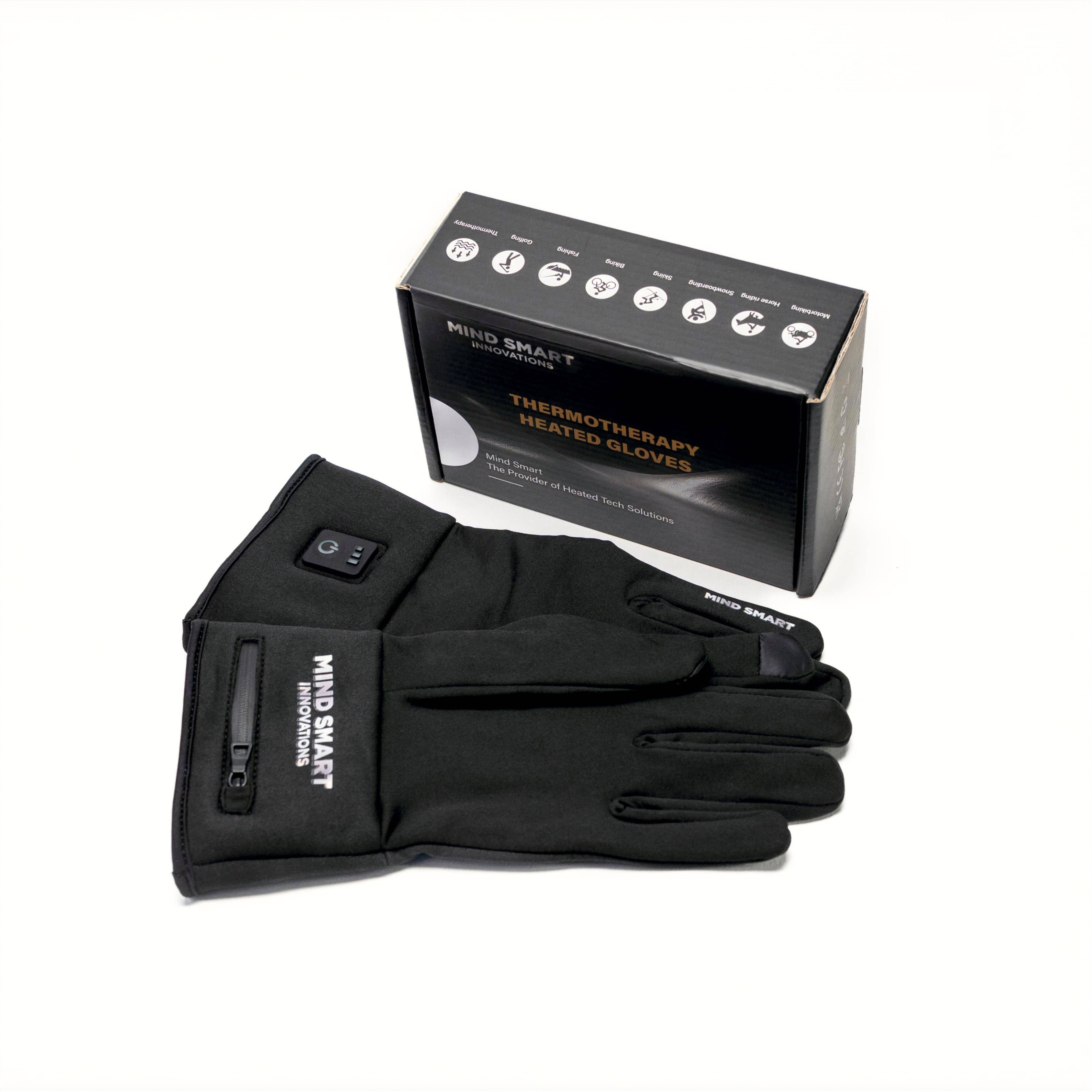
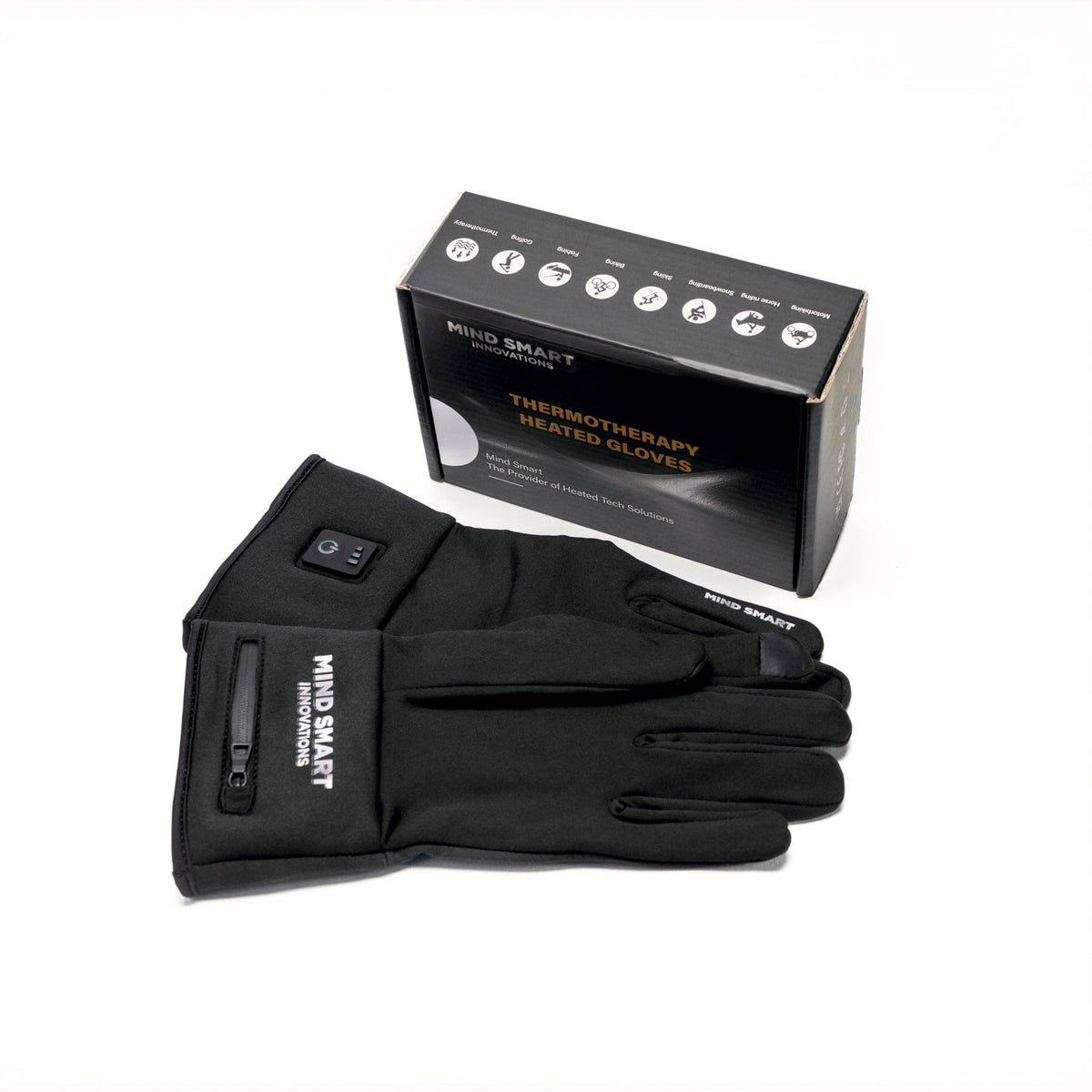
Mind Smart's heated gloves have a light, pliable, low-profile design and a heating area that covers the full hand and fingertips, which supports fine movement while the warmth does its job.
How Heated Gloves May Ease Arthritis Hand Pain and Stiffness
Warmth is often used to ease stiffness in the hands, and many people with arthritis say cold weather makes their joints feel worse. Some people find that keeping the hands warm helps them feel less stiff.
Heated gloves are not a treatment for arthritis. They are a comfort measure that can sit alongside medical advice and any treatment your clinician has recommended.
Heated Gloves vs Compression Gloves for Arthritis
Heated gloves and compression gloves solve different problems. Heated gloves add warmth. Compression gloves apply gentle, even pressure to the hand and fingers, which some people find supportive.
A simple way to decide:
- Choose heated gloves if cold makes your hands stiff and you want warmth for outdoor tasks, driving or commuting.
- Choose compression gloves if swelling or a feeling of looseness in the joints is your main concern and you want steady support.
- Consider both if you need warmth in winter and support during the day. Some people wear a thin compression layer under a heated glove, though check the fit first so it does not restrict your fingers.
Whatever you choose, avoid anything so tight that it cuts off feeling or leaves the fingers pale or tingling.
Heated Gloves for Rheumatoid Arthritis: What to Check First
Rheumatoid arthritis can cause swelling, morning stiffness and tender joints in the hands. Because flare-ups vary, what helps one week may not help the next.
Before buying heated gloves for rheumatoid arthritis, check these points:
- Finger coverage. Open or thinly lined fingertips may suit people who need to feel small objects. Full-finger designs offer more warmth.
- Pressure on the joints. Avoid tight cuffs or seams that press on swollen knuckles.
- Weight. Lighter gloves are easier to wear for longer periods.
If you have rheumatoid arthritis, it is sensible to ask your rheumatology team whether heated gloves are suitable for your situation.
Step-by-Step: Choosing Gloves That Protect Your Grip
Most buying guides tell you to check the size and look for thin fingertips. That is not enough to protect dexterity. The approach below works backwards from the tasks you actually need to do, then tests whether a pair genuinely helps.
Step 1: List your three hardest tasks
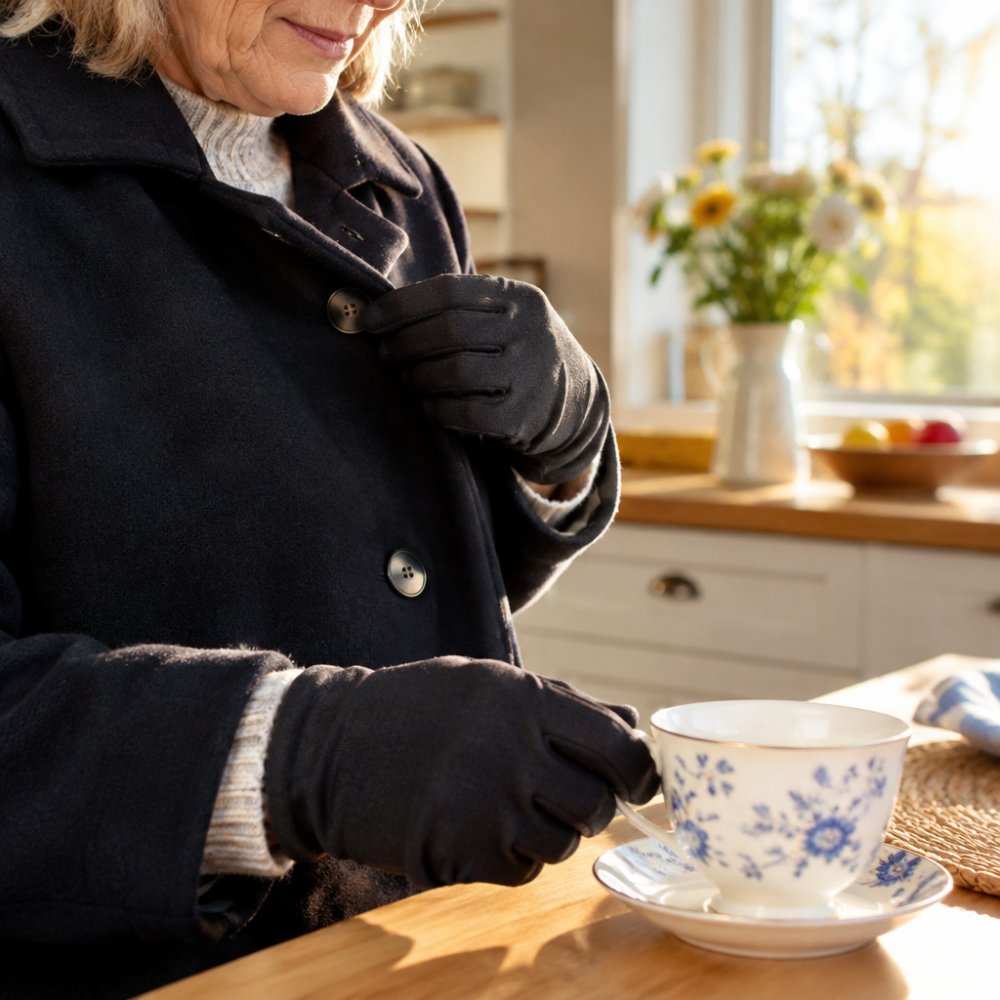
Write down the three everyday tasks that currently defeat you or slow you down. Common examples include fastening buttons, turning a key in a lock, holding a mug, typing, chopping vegetables, opening a jar, and gripping a steering wheel or shopping trolley handle. These tasks are your benchmark. A glove that improves warmth but makes any of them harder has failed the dexterity test, however good its specification looks.
Step 2: Match the glove format to the task
This is the decision most guides skip. Heated gloves come in three broad formats, and each trades warmth against finger mobility in a different way.
- Fingered heated gloves cover each finger individually. They offer the best balance for tasks that need pinch and precision, such as buttons, keys and phone screens, but the finger seams and heating elements add bulk at the tips.
- Heated mittens keep the fingers together in one compartment. They are the warmest option because the fingers share heat, but you lose independent finger movement almost entirely. Mittens suit walking, waiting outdoors or very cold conditions, not fine handling.
- Open-finger or convertible designs leave the fingertips exposed or allow a flap to fold back. They preserve feel for fine tasks but sacrifice warmth exactly where cold affects circulation most.
A common pattern is to choose fingered gloves for commuting, driving and shopping, and keep mittens for the coldest outdoor periods when dexterity matters less. If you need both warmth and precision, a thin fingered glove with a full-hand heating area is usually the better compromise than a thick mitten.
Step 3: Check the fingertip construction
Look specifically at what sits between your fingertip and the object you are holding. Thin, pliable finger linings preserve feel. Padded or reinforced tips protect against wear but blunt sensation. Seams that run across the fingertip pad create pressure points when you pinch. If you can, turn the glove inside out or feel the tip between finger and thumb before buying.
Step 4: Measure and check the fit at the knuckles
Measure the palm width at the widest point, just below the knuckles, and compare it with the size chart. A glove that is too loose bunches in the palm and forces you to grip harder; one that is too tight presses on swollen knuckles and restricts blood flow. Pay particular attention to the cuff: a tight cuff can be more restrictive than a tight finger.
Step 5: Run a short dexterity trial
Before wearing the gloves outside, put them on and attempt your three benchmark tasks from Step 1. Then repeat the timed test described below. A pair that feels warm but turns a ten-second button task into a minute-long struggle is not the right pair for you, regardless of its heat output.
Testing your dexterity before and after wearing them
Dexterity is easy to overlook until you need it, and most product descriptions make broad claims about mobility without giving you a way to check.
Before wearing the gloves, time how long it takes to pick up ten small items, coins, buttons or dried pasta, one at a time and drop them into a cup. Note any fumbling. After wearing the gloves for at least twenty minutes, repeat the test with the gloves on, then again with them off. Record all three times.
A useful pattern to look for: if the gloved time is noticeably slower than the bare-hand time, the gloves are costing you dexterity.
Watch out: do not judge a pair on warmth alone in the shop.
The article's steps can be scanned quickly, with the time or check each one needs:
| Step | What to do | Time or check |
|---|---|---|
| 1. List your three hardest tasks | Note everyday tasks that defeat or slow you down | Benchmark for every pair |
| 2. Match the glove format | Choose fingered, mitten or open-finger design | Fingered for precision, mittens for coldest days |
| 3. Check fingertip construction | Feel thin, pliable linings; avoid seams across the pad | Test between finger and thumb |
| 4. Measure and check fit | Measure palm width below the knuckles | Compare with size chart |
| 5. Run a short dexterity trial | Attempt your three benchmark tasks | Compare with bare-hand timing |
Heating Controls, Wear Time and Safe Use
Heat settings are where comfort and risk meet. Most heated gloves offer two or three levels, and the difference between the lowest and highest setting is usually larger than people expect, both in warmth and in how quickly the battery drains.
Start low and build up
Begin on the lowest setting for the first ten to fifteen minutes and only increase if your hands still feel cold. People with arthritis often have reduced sensation in the fingers, which means you may not feel overheating as quickly as someone with normal sensation. A glove that feels pleasantly warm on the back of the hand can be too hot at the fingertips, where the heating elements and the skin are closest together.
Check your skin regularly
Every twenty to thirty minutes, take the gloves off and look at your hands. Check the fingertips, the backs of the fingers and the knuckles. Stop using the gloves and speak to your GP or rheumatology team if you see redness that does not fade, blistering, swelling or unusually pale or dusky skin. If you have diabetes, Raynaud's or any condition that affects circulation or sensation, be especially cautious and ask your clinician before using heated gloves for long periods.
Know when to stop
Stop using the gloves immediately if you lose feeling in your fingers, if the skin becomes painful rather than warm, or if you feel tingling or numbness that was not there before. These are signs that the heat or the fit is affecting circulation. Do not sleep in heated gloves, do not leave them switched on unattended, and do not use them on broken or irritated skin.
Plan wear time around the setting
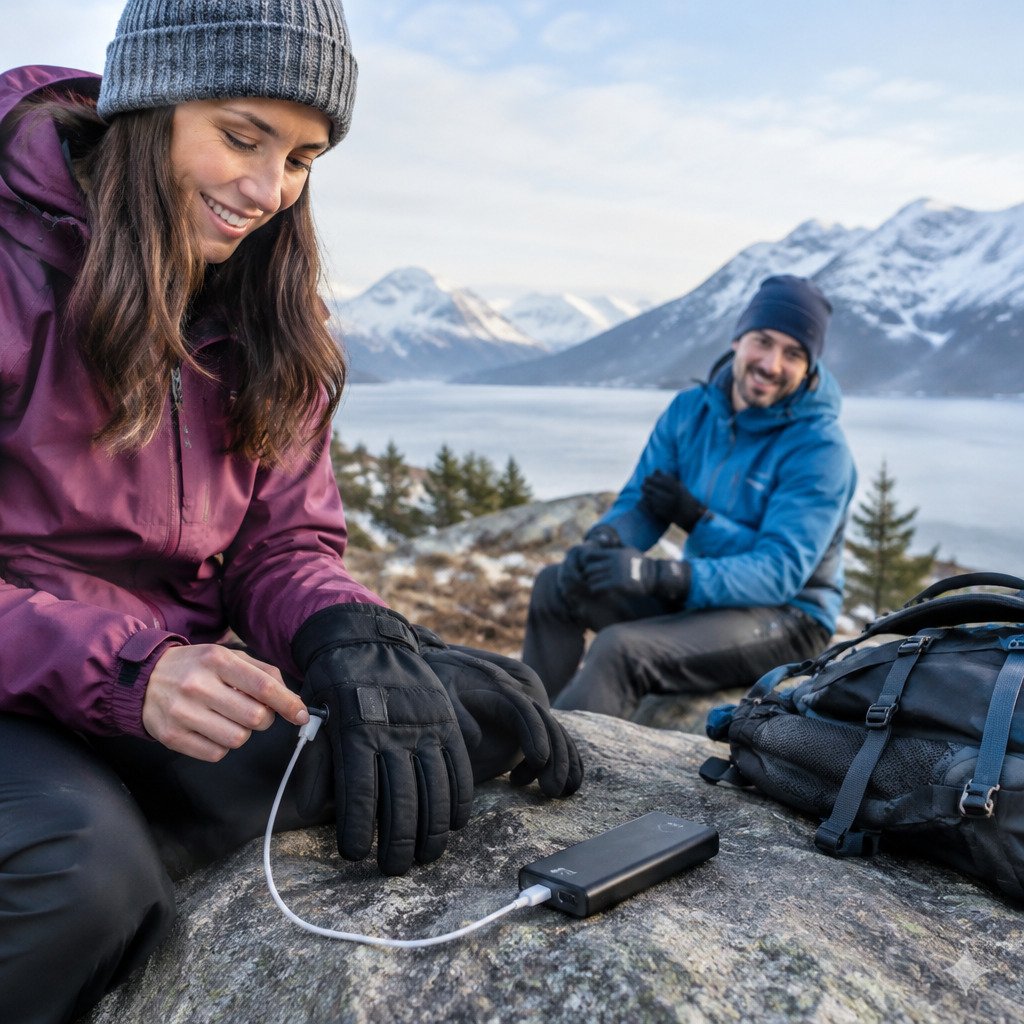
Higher settings use battery capacity faster. A pair rated for up to eight hours on the lowest setting will run for considerably less on the highest. If you need warmth for a long outdoor period, carry a spare charged battery or plan to switch to a lower setting once your hands are warm. Warmth is retained by the glove lining for a short time after switching off, so you can often turn the heat down rather than off.
Battery care and charging
Charge batteries fully before a long outing and avoid leaving them fully discharged for extended periods, as this reduces capacity over time. Use the charger supplied with the gloves and follow the manufacturer's instructions.
Watch out: reduced sensation means you cannot rely on feeling too hot as a warning. Set a timer to check your skin, and treat any change in skin colour or feeling as a reason to stop and seek advice.
Booking Your Trial Pair of Mind Smart Heated Gloves
If you have read this far, you have a clear checklist: thin fingertips for dexterity, a snug fit, adjustable heat and a battery you can rely on.
Try a pair in your own routine before deciding. Use the checklist above, wear them for a short trial, and see whether your grip and comfort hold up. You can find the gloves and their full specification on the Mind Smart heated gloves page.
Frequently Asked Questions
Can heated gloves help with arthritis finger stiffness?
Many people with arthritis find that gentle warmth makes their fingers feel looser and less stiff, especially on cold mornings. Warmth does not treat the underlying joint condition. Mind Smart Rechargeable Heated Gloves (£84.99) offer three thermostat-controlled heat settings, so you can start on a low setting and increase only if you need it. If stiffness persists or worsens, speak to your GP or rheumatology team.
Do heated gloves improve finger dexterity for people with arthritis?
Heated gloves can only help dexterity if they stay thin enough to let you feel and grip. Bulky gloves can make tasks like fastening buttons harder even when your hands feel warmer. The Mind Smart gloves use an ultra-thin construction with adjustable wrist straps. Test them with a few simple tasks, such as picking up coins or opening a jar, before relying on them for daily use.
Are heated gloves or compression gloves better for arthritis?
The two serve different purposes. Heated gloves add warmth. Compression gloves apply gentle, even pressure that some people find supportive for swelling and general hand comfort. Some people use both at different times. If warmth is your main concern, a heated pair suits you best; if you mainly want support, compression may fit better. Ask your healthcare provider which approach suits your symptoms.
Are heated gloves safe to use if you have reduced sensation in your hands?
Reduced sensation is an important safety concern, because you may not notice if a glove gets too hot. Choose a pair with a clear thermostat, start on the lowest setting, and check your hands regularly for redness or discomfort. Do not sleep in heated gloves or wear them for long unbroken periods. If you have diabetes, neuropathy or circulation problems, speak to your GP before using heated gloves regularly.


Leave a comment
This site is protected by hCaptcha and the hCaptcha Privacy Policy and Terms of Service apply.