
Table of Contents
- What Extreme Cold Does to Your Hands and Why Heated Gloves Matter
- Heated Gloves for Raynaud's Disease: Managing Symptoms in Freezing Conditions
- Battery Life of Heated Gloves: What to Expect and How to Extend It
- How to Choose Heated Gloves for Winter: A Practical Checklist
- Materials and Construction: What Separates Good Heated Gloves from Great Ones
- Durability, Repairability, and Warranty: Long-Term Value
- Conclusion
- Frequently Asked Questions
Last Updated: September 12, 2026
What Extreme Cold Does to Your Hands and Why Heated Gloves Matter
Heated gloves for extreme cold weather are battery-powered hand coverings with integrated heating elements that maintain finger and palm temperature when standard insulation fails. This guide from Mind Smart covers what happens to your hands in freezing conditions, which gloves work, and how to choose a pair that lasts.
When temperatures drop, blood vessels near the skin constrict to preserve core temperature, vasoconstriction. Your fingers receive less blood, lose heat rapidly, and eventually lose dexterity. For anyone working outdoors, commuting, or managing a circulation condition, that progression from cold to numb to painful happens faster than expected.
The Science of Cold Hands: Vasoconstriction and Pain
Vasoconstriction is the narrowing of blood vessels that reduces blood flow to extremities in cold conditions. It prioritises your core but leaves fingers vulnerable.
The result follows a predictable pattern: tingling, then numbness, then sharp pain as tissue cools. Dexterity drops before you notice it, which matters when you're operating machinery or gripping tools.
Who Benefits Most from Heated Gloves
Not everyone needs powered warmth. But several groups find standard insulation insufficient:
- People with Raynaud's syndrome or arthritis, where circulation is already compromised
- Outdoor professionals working in cold storage, maritime, or construction environments
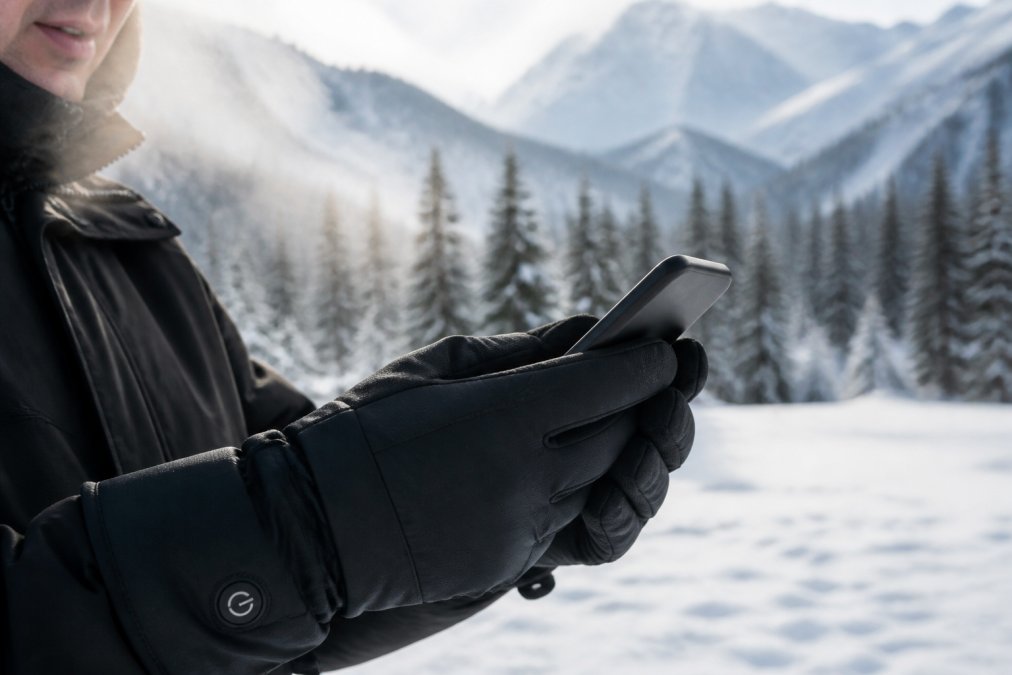
- Winter sports participants who need touchscreen access without removing gloves
- Commuters exposed to wind chill during daily travel
The common thread is duration. Brief exposure is manageable. Sustained cold demands active heat.
Heated Gloves for Raynaud's Disease: Managing Symptoms in Freezing Conditions
Heated gloves for Raynaud's disease maintain consistent warmth across the fingers, preventing the vasospasm that triggers attacks. Unlike reactive warming, powered heat interrupts the cycle before numbness sets in.
For arthritis sufferers, the benefit is twofold: warmth reduces joint stiffness, and the gentle compression of a well-fitted glove supports grip without restricting movement.
How Heated Gloves Help Raynaud's and Arthritis
The key is heat distribution. Gloves that warm only the back of the hand leave fingertips cold, precisely where Raynaud's attacks begin. Look for heating elements that wrap the fingers, not just the palm.
Mind Smart designed its thermotherapy gloves with full-hand and fingertip coverage for this reason. The low-profile construction maintains dexterity, so you can grip a mug, type, or operate controls without removing them.
Battery Life of Heated Gloves: What to Expect and How to Extend It
Runtime is the specification buyers care about most and the one most often overstated. The honest figure depends on three variables: battery capacity (milliamp-hours, mAh), the heat setting you use, and the ambient temperature the battery sits in.
A typical heated glove runs on a 7.4V lithium-ion pack in the 2,000-3,000mAh range. At that capacity you can broadly expect:
- Low setting: roughly 6-8 hours
- Medium setting: roughly 3-5 hours
- High setting: roughly 1.5-2.5 hours
Those figures assume a mild ambient temperature. In genuine sub-zero conditions they fall, chemistry, not a manufacturing fault.
Lithium-Ion Batteries and Cold Weather Performance
Lithium-ion cells generate power through lithium ions moving between electrodes through an electrolyte. Cold thickens that electrolyte and slows the reaction, raising internal resistance. The battery delivers less usable capacity, and voltage sags under load, so the glove may cut out on high heat even though charge remains.
As a rule of thumb, expect to lose roughly 20-30% of rated capacity at around -10°C, and more as you approach -20°C. A pack rated for eight hours indoors may give five to six outdoors. This is normal, not a defect.
Three ways to mitigate it:
- Keep spare batteries inside a jacket pocket, close to your core, so they stay near room temperature until needed. A cold spare in an outer pocket is a dead spare.
- Start on a higher setting, then drop down. Warming the glove from the inside raises the temperature around the battery and restores some capacity.
- Choose a glove with a removable battery so you can swap packs without removing the gloves, which matters when dexterity is already compromised.
Charging Time and Long-Term Battery Health
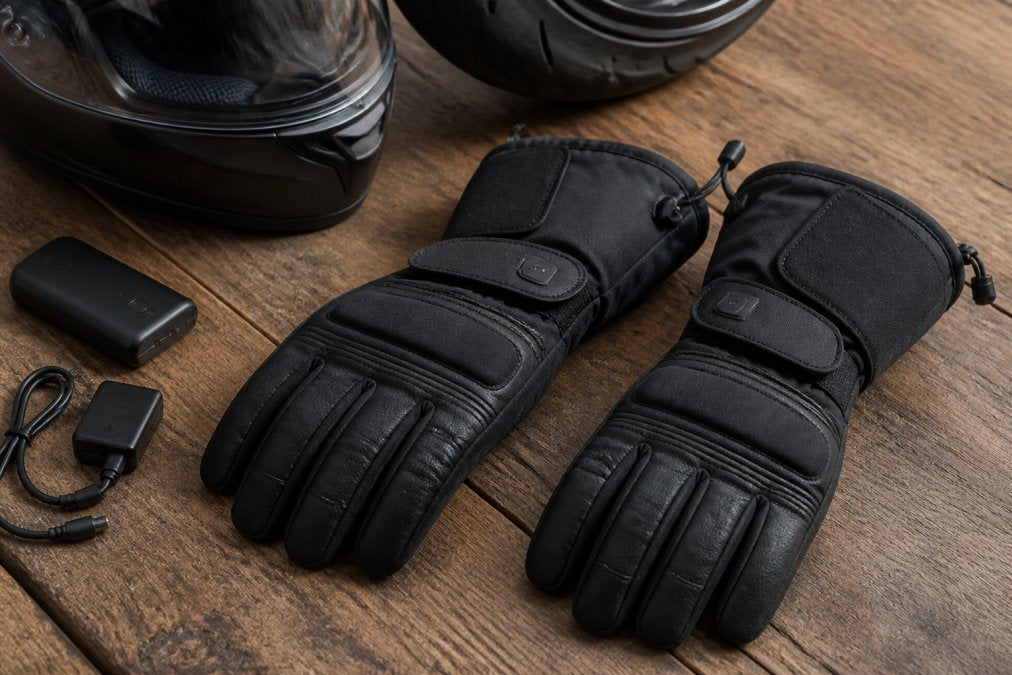
Charging time scales with capacity: a 2,000mAh pack reaches full charge in two to three hours; a 3,000mAh pack takes three to four. Most gloves use a USB-C or barrel connector and include a dual charger so both packs top up at once.
To get the longest service life from lithium-ion packs:
- Let batteries cool before charging. Charging a warm pack accelerates cell degradation.
- Never charge below freezing. Charging cold lithium-ion cells can cause permanent capacity loss through lithium plating, and in rare cases internal damage. Bring packs to room temperature first, this is the single most common cause of premature battery failure.
- Store at around 50% charge if the gloves will sit unused through summer. Storing at 100% or at 0% both shorten lifespan.
- Avoid leaving packs on the charger indefinitely. Once the indicator shows full, unplug.
- Replace the battery, not the glove. Packs are consumable; heating elements and shells are not. A glove with a replaceable battery will outlast one with a sealed pack by several seasons.
A well-cared-for pack should hold most of its capacity for two to three winters, after which runtime drops noticeably, the point to buy a replacement rather than a new pair of gloves.
Weight-to-Warmth: The Trade-Off Nobody Mentions
Battery capacity and warmth both add mass, and mass is the enemy of dexterity. A 3,000mAh pack that gives eight hours of heat weighs meaningfully more than a 2,000mAh pack, and that weight sits on the back of the hand where it affects grip and fatigue.
For technical use, climbing, rope work, operating controls, a lighter pack with a spare in a pocket beats a single heavy pack. For commuting or static outdoor work, the heavier pack wins because you aren't fighting gravity with your fingers. Match the battery to the activity, not the marketing headline.
How to Choose Heated Gloves for Winter: A Practical Checklist
How to choose heated gloves for winter comes down to matching specifications to your actual use case. A commuter needs different features than a cold storage worker. Use this checklist to narrow your options.
Key Features to Compare
| Feature | What to Look For | Why It Matters |
|---|---|---|
| Battery life | 4-8 hours at mid setting | Determines usable session length |
| Heat settings | 3 levels minimum | Balances warmth against runtime |
| Waterproofing | 10,000mm rating or higher | Keeps heat in, moisture out |
| Touchscreen | Fingertip conductivity | Avoids removing gloves in cold |
| Heating coverage | Full hand and fingertips | Prevents cold spots |
| Fit | Snug but not restrictive | Maintains dexterity and circulation |
Sizing and Fit Guide
Measure your dominant hand around the widest part of your palm, just below the knuckles. Compare that measurement to the manufacturer's chart rather than assuming your standard glove size.
A glove that's too loose traps less heat and bunches when you grip. Too tight and you restrict blood flow, defeating the purpose. The ideal fit feels snug across the palm with full finger movement.
NHS guidance on Raynaud's syndrome
Materials and Construction: What Separates Good Heated Gloves from Great Ones
A heated glove is a layered system, and every layer has a job. Get one wrong and the heat you paid for escapes before it reaches your fingers. Understanding the stack lets you judge a glove on specification rather than marketing.
From outside in, a well-built glove has five layers: an outer shell, a waterproof/breathable membrane, an insulation layer, the heating element, and a lining.
Waterproofing and Breathability Ratings
Waterproof ratings are expressed in millimetres, the height of a water column the fabric resists before leaking. A 10,000mm rating handles heavy rain and wet snow; 5,000mm copes with light showers; 20,000mm is expedition-grade. Breathability is measured in grams of moisture vapour per square metre over 24 hours (g/m²/24h): 10,000g prevents sweat buildup during active use; 5,000g suits low-exertion wear.
Both numbers matter together. A waterproof glove that doesn't breathe traps sweat, and wet hands lose heat roughly 25 times faster than dry ones, so a 'waterproof' glove with poor breathability can leave you colder than a breathable non-waterproof one.
The membrane itself is usually one of three types:
- PTFE-based membranes (the Gore-Tex family and equivalents) offer the best balance of waterproofing and breathability but add cost.
- PU-based membranes are cheaper and slightly less breathable, but perfectly adequate for commuting and general winter use.
- Coated fabrics (a waterproof treatment applied directly to the shell) are the least breathable and degrade with washing. Treat any 'water-resistant' claim on a coated glove with caution.
Insulation: Down, Synthetic and the Case for Each
Insulation traps air, and trapped air keeps heat in. The three common options behave differently:
- Down offers the best warmth-to-weight ratio and compresses well, but loses insulating value when wet and is slow to dry. Best for dry cold.
- Synthetic fills (polyester and similar) retain warmth when damp and dry quickly, but are bulkier for the same warmth. Best for wet cold and active use.
- Fleece linings add a light insulating layer and wick moisture, but are not sufficient alone in extreme cold.
For extreme cold weather, a synthetic fill combined with a fleece lining is the most reliable choice, because it tolerates the moisture your hands will inevitably produce.
Heating Elements and Heat Distribution
Carbon fibre heating elements are the current standard: flexible, lightweight, and distributing heat across a wider area than older wire elements, which created hot spots and failed at flex points. Graphene elements are emerging with faster warm-up, though less widely available.
Placement matters as much as material. Elements should cover the back of the hand (where blood vessels are closest to the surface), the palm, and, critically, the fingertips. Even distribution prevents the common complaint of warm palms with frozen fingers.
Wrist Cuff Design and Wind Protection
Heat escapes through the wrist opening, and wind accelerates that loss. A good cuff has three features:
- A gauntlet or long cuff that overlaps the jacket sleeve, sealing the gap where cold air enters.
- An adjustable closure (hook-and-loop or drawcord) so the cuff can be tightened without restricting circulation.
- A windproof outer layer, since wind chill strips heat far faster than still air at the same temperature.
A too-tight cuff is worse than a loose one: it restricts blood flow at the wrist and can trigger the very numbness the gloves are meant to prevent.
Medical-Grade vs. Recreational Use
Not all buyers need the same glove. For someone with Raynaud's syndrome, arthritis or a diagnosed circulation condition, the priorities are consistent low-level warmth across the whole hand, gentle compression that supports without restricting, and fingertip coverage. For a recreational skier or commuter, they are higher peak heat, waterproofing and touchscreen access.
A glove optimised for one is rarely optimal for the other. If circulation is the issue, prioritise even heat distribution and a non-restrictive fit over maximum temperature. If performance is the issue, prioritise waterproofing and dexterity over medical-grade coverage.
NHS guidance on Raynaud's syndrome
Durability, Repairability, and Warranty: Long-Term Value
Durability in extreme conditions depends on construction quality, but repairability determines long-term value. Gloves that can't be repaired become waste when a single element fails.
Before buying, check whether the manufacturer offers replacement batteries, and whether the warranty covers heating elements separately from the outer shell. A two-year warranty on electronics is standard; anything less suggests limited confidence in the product.
Mind Smart's gloves were trialled by trawlermen working in extreme cold and wet conditions in the North Sea, where failure isn't an option. That testing informed the watertight element design.
HSE guidance on cold stress for outdoor workers
Conclusion
Choosing heated gloves for extreme cold weather means looking past marketing claims and examining battery chemistry, heating element placement, and waterproofing ratings. The right pair keeps your hands functional, not just warm.
If you need reliable warmth for Raynaud's, arthritis, outdoor work, or winter commuting, Mind Smart offers rechargeable heated gloves with full-hand heating, 10,000mm waterproofing, touchscreen compatibility, and up to eight hours of warmth. Shop Mind Smart and keep your hands working all winter.
Frequently Asked Questions
Do heated gloves actually work for Raynaud's disease?
Yes. Heated gloves for Raynaud's disease work by delivering consistent warmth to the hands and fingers, which helps prevent the blood vessel spasms that cause pain and numbness. Unlike standard gloves that rely on trapped body heat, heated gloves actively warm the fingers, improving circulation. Many users report fewer and less severe attacks when wearing them. Look for gloves with full-hand and fingertip heating, adjustable temperature settings, and a snug but not tight fit to avoid restricting blood flow.
How long do rechargeable heated gloves last on a single charge?
Most rechargeable heated gloves last between 2 and 8 hours on a single charge, depending on the heat setting and battery capacity. Lower heat settings extend battery life, while the highest setting drains it faster. Cold weather itself reduces lithium-ion battery performance, so you may get less time in extreme conditions. To maximise runtime, start on a lower setting and only increase as needed. Carrying a spare battery is a practical option for long days outdoors.
Are heated gloves waterproof enough for heavy snow and rain?
It depends on the glove's waterproof rating. Look for a waterproof membrane with a rating of at least 10,000mm, which means it can withstand significant water pressure without leaking. Breathability is equally important; a rating of 10,000g or higher allows sweat vapour to escape, preventing clammy hands. Gloves with sealed seams and watertight heating elements offer the best protection.
What features should I look for in professional-grade heated gloves?
For professional use in extreme cold, prioritise battery life of at least 6 hours on a medium setting, a waterproof and breathable membrane, and heating elements that cover the full hand and fingertips. Touchscreen compatibility, a secure wrist strap, and a durable grip are also important. Check the insulation rating and whether the gloves are windproof. A warranty of at least one year and available replacement batteries add long-term value. Fit matters too: gloves that are too tight restrict circulation and reduce warmth.


Leave a comment
This site is protected by hCaptcha and the hCaptcha Privacy Policy and Terms of Service apply.